
How to Move Large Appliances: Fridge, Washer and More

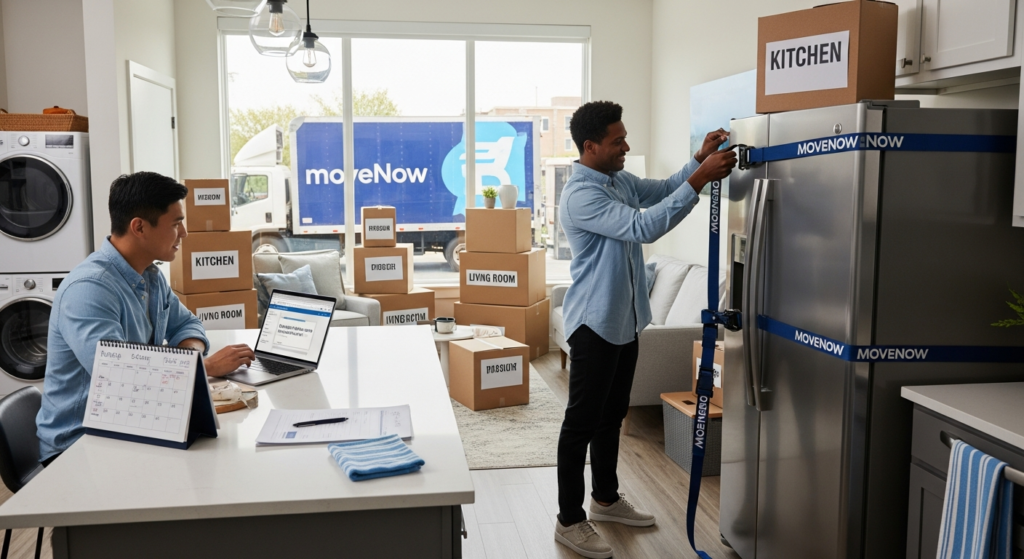
Large appliances are some of the hardest items to move safely. They are heavy, awkward, expensive, and often connected to water, gas, or electricity. A scratched fridge door or a bent washer drum can cost hundreds of dollars to fix, and improper handling can damage floors, walls, and even your new home's hookups.
Knowing how to move large appliances like refrigerators, freezers, washers, dryers, stoves, and dishwashers is about more than brute strength. You need the right tools, prep steps, and a plan for doorways, stairs, parking, and timing with your movers or rental truck.
This guide walks you through how to move large appliances step by step, when it makes sense to hire professionals, and how to compare moving companies that offer appliance handling. You'll learn what to do a week before your move, how to disconnect each appliance, how to protect floors and walls, and what questions to ask movers before you book.
Whether you're moving across town or state to state, using a marketplace like Moving US Van Lines can help you compare licensed and insured movers that handle appliances regularly so you don't have to guess who is prepared for the job.
Key takeaways
- Plan at least 24 hours ahead for moving a refrigerator so it can be emptied, defrosted, cleaned, and fully dried before transport.
- For moving a washer and dryer, you need to shut off water and power, disconnect hoses, and use shipping bolts in front-load washers to protect the drum.
- Protect floors, walls, and doorways with sliders, runners, and blankets; large appliances often cause the worst move-day property damage.
- Accurate details about stairs, tight turns, and hookup types help movers price appliance handling correctly and arrive with proper tools.
- Comparing quotes from multiple licensed movers through a marketplace like Moving US Van Lines can help you align price, service level, and appliance expertise.
- Decide early whether you want movers to disconnect/reconnect appliances or if you'll hire a specialist for gas lines and complex hookups.
- Keep manuals, small parts, and water pan contents with you so you can safely reconnect and troubleshoot appliances in your new home.
Why careful appliance moving matters
When people think about moving, they often focus on boxes, furniture, and timing. Large appliances are easy to overlook until the last minute, but they are some of the highest-value and highest-risk items in your home.
Knowing how to move large appliances correctly protects three things:
- Your safety and your helpers' safety
- Your appliances and your property (walls, floors, doors)
- Your budget and schedule, by avoiding delays or emergency repairs
Common problems when appliances are rushed on moving day include:
- Water leaks from washers, fridges, or dishwashers soaking boxes and floors
- Scratched hardwood, torn vinyl, or cracked tiles from sliding heavy units
- Dent damage in refrigerators and washers from tight turns or stairs
- Broken fridge compressors from laying units flat too long
- Gas leaks from DIY range or dryer disconnections
That's why many people compare professional movers specifically based on their appliance experience. When you use a moving quote comparison platform like Moving US Van Lines, you can look for movers who clearly list appliance handling, packing, and complex access as part of their services.
How to prepare before requesting appliance moving quotes
Before you request quotes or book movers, take stock of every large appliance you plan to move. Clear information helps movers price your job accurately and show up with the right crew size, tools, and protection.
Make a complete appliance inventory
Walk through your home room by room and list any item that is both heavy and connected to a utility. Include:
- Refrigerator(s) and freezer(s)
- Washer and dryer (gas or electric)
- Range or cooktop (gas or electric)
- Wall oven or built-in microwave
- Dishwasher
- Wine fridge or beverage cooler
- Extra chest or upright freezers
- Large utility sinks or specialty laundry appliances
For each item, note:
- Brand and approximate size (standard, counter-depth, oversized, compact)
- Location in the home (kitchen, basement, second floor, garage)
- How far it is from the nearest exit
- Any tight turns, narrow doors, or stairs involved
- Connection type: water, electric, gas, vented dryer, ventless dryer
Example inventory note: "Main fridge, 36-inch French door, in kitchen, one narrow door and 5 steps to front door, connected to water, hardwood floors."
Measure critical spaces
Next, measure:
- The width, depth, and height of each appliance
- The width and height of doorways and hallways along the path out
- Stair width and any low ceilings or railings
This tells you whether doors must be removed or if railings need to be temporarily unscrewed. It also alerts movers to bring tools and extra protection for tight spaces.
Decide who will handle disconnection and reconnection
Some movers will disconnect and reconnect simple electric and water connections; others require appliances to be disconnected before they arrive. Gas lines and complex built-in appliances may require a licensed technician.
Before you start comparing movers, decide:
- Are you comfortable turning off water and power and capping lines?
- Do you have a preferred appliance technician already?
- Would you prefer movers or a separate pro to handle gas lines?
Share your preference when you request moving quotes so movers can include or exclude those tasks in their estimates.
Plan timing for fridge and freezer prep
Moving a refrigerator safely generally requires at least 24 hours of lead time for defrosting and drying. Build this into your moving schedule and mention your timing expectations when you compare movers.
What affects moving quotes for large appliances
When you request quotes that include appliance handling, movers look at more than just how many items you have. Understanding the cost factors will help you compare estimates fairly.
| Cost factor | How it affects quotes | What you can do |
|---|---|---|
| Number and type of appliances | More and larger items (like double-door fridges or stacked washer/dryers) increase time and labor required. | Provide a detailed list with sizes and special notes during quote requests. |
| Access and layout challenges | Stairs, long carries, elevators, and tight turns may require extra crew or time, raising the price. | Describe stairs, elevator rules, and narrow spaces accurately. |
| Disconnection/reconnection needs | If movers handle hookups (where allowed), they may charge extra or require more time. | Clarify who disconnects what so estimates reflect your real plan. |
| Distance and move type | Local moves usually charge hourly; interstate moves factor appliance weight, services, and mileage. | When comparing movers, note if pricing is hourly or flat-rate/weight-based. |
| Packing and protection materials | Extra pads, shrink wrap, crating, and floor protection may carry line-item costs. | Ask which protective materials are included vs billed separately. |
When you use a comparison tool like Moving US Van Lines, you can submit your appliance list once, then review how different movers price and describe appliance handling in their quotes.
Tools and supplies you need to move large appliances
Even if you hire movers, understanding the tools that should be used will help you evaluate quotes and ask the right questions.
Essential equipment
- Appliance dolly with straps (rated for at least 600 lb)
- Standard hand truck for lighter items
- Furniture sliders for hard floors and carpet
- Moving straps or lifting harnesses (for pros only, if trained)
- Thick moving blankets and corner protectors
- Stretch wrap / plastic wrap
- Floor runners or ram board for hallways
- Ratchet straps or tie-downs inside the truck
Basic hand tools and safety items
- Adjustable wrench and screwdriver set
- Pliers and hose wrench (for water connections)
- Level (to re-level appliances at destination)
- Work gloves with good grip
- Non-slip, closed-toe shoes or boots
If a mover shows up to move a refrigerator or washer and dryer with no appliance dolly, no floor protection, and no straps, that's a red flag. When you compare quotes, ask which tools and protections are standard for appliance moves.
Step-by-step: moving a refrigerator or freezer
Moving a refrigerator incorrectly can damage the compressor, cause leaks, and ruin flooring. Following a clear process reduces the risk.
Timeline for moving a refrigerator
| When | Task | Notes |
|---|---|---|
| 3–5 days before | Plan meals and start using perishable foods. | Aim to have minimal food left by the day before the move. |
| 24 hours before | Empty freezer, unplug fridge, defrost if needed, and clean. | Place towels or trays to catch melting ice and water. |
| Move day morning | Secure shelves, remove loose parts, wrap and prepare to move. | Use tape and padding but avoid taping directly to delicate finishes. |
| Arrival at new home | Place, level, reconnect, and let it sit upright before restarting. | Many manufacturers recommend 2–4 hours upright before turning on. |
Detailed steps for moving a refrigerator
- Empty and defrost
- Remove all food, drinks, and ice.
- Unplug the fridge.
- If it has a freezer section, turn it off and leave doors open to defrost.
- Place towels or a baking sheet under the front to catch water.
- Disconnect water line (if installed)
- Turn off the water supply valve (often behind the fridge or under the sink).
- Loosen the water line connection using an adjustable wrench.
- Keep a small container and towels ready for drips.
- Cap or tape the line securely so it doesn't drag or snag during the move.
- Remove or secure shelves and drawers
- Take out glass shelves, drawers, and door bins and pack them separately, or secure them in place with stretch wrap.
- If you leave them inside, use extra padding and ensure they can't slide.
- Protect doors and sides
- Use moving blankets on front and sides; secure with stretch wrap or tape (tape only onto the blankets, not the appliance finish).
- If the unit is very large or doorways are narrow, remove the doors following the manufacturer's instructions.
- Use an appliance dolly and floor protection
- Slide an appliance dolly under the side of the fridge, tilting slightly and carefully.
- Use straps to secure the fridge tightly to the dolly.
- Lay down floor runners or sliders along the exit path.
- Keep the fridge upright
- When moving a refrigerator, keep it upright whenever possible to protect the compressor and internal oil.
- If it must go on its side briefly, follow the manufacturer's guidance and allow additional time upright before turning it back on.
- Load and secure in truck
- Place the fridge toward the front or side wall of the truck.
- Use ratchet straps to secure it so it can't shift.
- Keep it upright, not flat, for the entire trip.
Moving professionals who do this daily have repeatable processes for each step above. When you compare movers on a platform like Moving US Van Lines, look for companies who clearly explain their process for moving a refrigerator and other large appliances.
Step-by-step: moving a washer and dryer
Moving a washer and dryer safely protects your floors, hoses, and, in the case of gas dryers, your home's safety. It's important to know when DIY is okay and when you need a pro.
Washer and dryer prep checklist
- Shut off water supply to the washer.
- Run a drain/spin cycle to remove excess water.
- Disconnect water hoses and drain the remaining water into a bucket.
- Secure or remove power cords.
- For front-load washers, install shipping bolts according to the manual.
- For gas dryers, shut off gas at the valve and consider a licensed technician for disconnection.
- Clean lint trap and dryer vent hose; disconnect vent hose.
- Pad and wrap units to protect finish and doors.
Moving a washer: key steps
- Turn off utilities
- Turn off the washer's water valves (usually hot and cold) at the wall.
- Unplug the washer from the electrical outlet.
- Drain and disconnect hoses
- Run a brief spin cycle to clear water from the drum.
- Disconnect hoses from the back of the washer and from the wall valves, catching water in a bucket.
- Remove the drain hose from the standpipe or sink and let any remaining water drain into a bucket.
- Protect the drum
- For front-load models, install shipping bolts as recommended by the manufacturer to immobilize the drum.
- For top-load models, secure the lid with tape or stretch wrap.
- Prepare for transport
- Coil and tape hoses and power cord to the back or inside the washer (without blocking doors).
- Wrap the unit in a moving blanket and secure with stretch wrap.
- Move with an appliance dolly
- Slide the dolly under the washer, tilt carefully, and strap it securely.
- Protect floors and door frames during the move out.
Moving a dryer: electric vs gas
Moving a washer and dryer depends heavily on whether the dryer is electric or gas.
| Dryer type | Key considerations | Who should disconnect? |
|---|---|---|
| Electric dryer | Standard plug or 240V outlet; disconnecting usually involves unplugging and removing vent hose. | Many homeowners or movers can safely handle this, following basic safety steps. |
| Gas dryer | Gas line connection and shutoff valve; risk of leaks if not handled correctly. | Often best handled by a licensed technician or qualified pro. |
Steps for moving a dryer:
- Disconnect power
- Unplug the dryer from the outlet.
- If hard-wired (rare in homes), hire an electrician to disconnect.
- Disconnect vent hose
- Loosen the clamp and detach the vent hose from both the dryer and wall connection.
- Clean lint from the hose and either discard or transport to reuse.
- Handle gas connections carefully
- For gas dryers, turn off the gas valve at the wall.
- Unless you are trained and fully comfortable, arrange for a licensed technician to disconnect and cap the line.
- Wrap and move
- Secure the door, tape or wrap the power cord and vent hose to the unit.
- Wrap with a moving blanket and use an appliance dolly.
When comparing movers through a site like Moving US Van Lines, specifically ask how they handle moving a washer and dryer, whether they install shipping bolts, and if they disconnect/reconnect gas dryers or recommend a separate technician.
How to move stoves, dishwashers and other major appliances
Beyond the fridge, washer, and dryer, you may also need to move your range, oven, dishwasher, and built-in appliances.
Moving a range or cooktop
- Electric ranges
- Turn off the breaker if needed, then unplug the range.
- Remove racks and secure or remove coil elements.
- Wrap glass doors and controls with padding.
- Gas ranges
- Turn off gas at the shutoff valve.
- Have a qualified technician disconnect the gas line if you are unsure.
- Cap the gas line to prevent accidental re-opening before reinstall.
Moving a dishwasher
- Shut off the water supply and turn off the breaker (if hard-wired).
- Disconnect inlet water line and drain line (usually from garbage disposal or sink drain).
- Gently pull out the dishwasher after removing mounting screws from the countertop.
- Secure loose cords, hoses, and the door; wrap with a blanket.
Built-in dishwashers and microwaves can be more involved, especially if wiring is hard-wired rather than plug-in. In some cases, your mover may recommend that an appliance installer or electrician handle removal and reinstallation.
Comparing movers for specialty appliances
If you have wine fridges, oversized commercial-style ranges, or built-in refrigeration, note this specifically when you request quotes. Some movers specialize in high-end appliances and may offer custom crating or white-glove services.
| Appliance type | Risks if moved incorrectly | Best practice |
|---|---|---|
| Glass-top range | Cracked cooktop, broken controls, scratches on finish. | Extra padding over glass, careful dolly use, avoid stacking items on top. |
| Built-in dishwasher | Water leaks, damage to surrounding cabinets, electrical issues. | Shutoffs before disconnection, proper capping of lines, cabinet protection. |
| Wine fridge | Compressor damage, temperature control issues, broken racks. | Upright transport, internal rack removal, manufacturer guidance for restart. |
DIY vs professional movers for appliances
Knowing how to move large appliances helps whether you're doing it yourself or hiring pros. The decision often comes down to your comfort level, access challenges, and the value of your appliances.
When DIY might work
- You're moving locally with minimal stairs and good access.
- Your appliances are newer and you have the manuals or can access guidance.
- You have at least one strong helper and can rent an appliance dolly.
- You're comfortable shutting off water and power connections.
Sample decision thought: "We're moving 10 minutes away, ground floor to ground floor, and I'm comfortable disconnecting our electric dryer. We'll move the washer, dryer, and small fridge ourselves but hire movers for the rest."
When to strongly consider professional movers
- You're moving a refrigerator that must navigate tight stairs or townhome layouts.
- Your washer and dryer are on upper floors with narrow doorways.
- You have a gas range or gas dryer you don't want to risk disconnecting wrong.
- You own high-end appliances (built-in fridge, commercial range, wine storage).
- You're moving long-distance and want professional packing and loading.
In these situations, using a service like Moving US Van Lines to compare movers with appliance experience can save you time and reduce risk. You can submit your move details once, including your appliance list, and review quotes from licensed movers side by side.
How to compare movers that handle appliances
Once you understand the basics of how to move large appliances, you'll be in a stronger position to compare movers and their services.
Key questions to ask movers about appliances
- Do you regularly move large appliances like fridges, washers, dryers, and ranges?
- What tools and protection do you use when moving a refrigerator or washer and dryer?
- Do you provide disconnection and reconnection for water lines and electric hookups?
- How do you handle gas lines? Do you require a licensed technician?
- Are there extra charges for appliance handling or stair carries?
- What valuation or protection options apply if an appliance is damaged?
Sample email wording when requesting quotes:
«We're moving a 3-bedroom home and need help moving a refrigerator, washer, dryer, and gas range from a second-floor kitchen down a narrow staircase. Do your crews regularly handle these appliances, and can you include appliance handling in your quote?»
Comparing appliance services side by side
When you receive multiple quotes through a comparison platform like Moving US Van Lines, look beyond price. Review how each mover addresses appliances:
| Comparison point | Mover A | Mover B |
|---|---|---|
| Appliance experience described | Mentions appliance dolly, floor protection, and shipping bolts for washers. | No specific mention of appliances beyond "full-service move." |
| Disconnection services | Disconnects water/electric, refers gas work to technician. | Requires all appliances to be disconnected before arrival. |
| Extra fees | Flat fee per appliance, clearly listed in the estimate. | Hourly with appliance surcharges mentioned only in fine print. |
The best fit might not be the cheapest; it's often the mover who clearly understands how to move large appliances in homes like yours.
Helpful Moving US Van Lines resources
Moving-day checklist for large appliances
On moving day, a simple checklist helps make sure nothing is missed with your appliances.
Before movers arrive
- Confirm that all food is removed from the fridge and freezer.
- Verify that the fridge has defrosted and is dry inside.
- Ensure washer water supply is off and hoses are disconnected and drained.
- Make sure dryer power is unplugged and, for gas models, gas is turned off and, if applicable, professionally disconnected.
- Double-check that ranges and dishwashers are disconnected as planned.
- Clear paths from each appliance to the exit (remove rugs, shoes, boxes).
While movers handle appliances
- Point out any fragile flooring, thresholds, or tight turns.
- Confirm that dollies, straps, and blankets are being used.
- Ask where they will load appliances in the truck and how they will be secured.
- Keep small children and pets away from the work area.
At the new home
- Direct movers where to place each appliance (final wall, side, or nook).
- Make sure there's enough space to open doors fully.
- Check that appliances are level after they're placed.
- Follow manufacturer guidance for how long to wait before plugging in a fridge or freezer that has been moved.
What to keep with you (not on the truck)
Some items related to your appliances are better kept in your personal vehicle, not on the moving truck.
- Owner's manuals and warranty documents
- Small parts (screws, brackets, hose clamps) in labeled bags
- Water line caps and hose washers
- Special tools (shipping bolts for washers, leveling feet if removed)
- High-value accessories like custom shelves or inserts
Place these in a clearly marked box or bag and keep it with your essential move-day items. That way, when you're ready to reconnect your appliances, you have everything on hand.
Frequently asked questions
How long before moving should I unplug my refrigerator?
For most standard fridges, plan to unplug and start defrosting at least 24 hours before moving. This gives plenty of time for ice to melt and for the interior to dry, reducing the risk of leaks and odors while in transit.
Can I lay my refrigerator on its side during a move?
It's best to keep refrigerators upright whenever possible. If a fridge must go on its side briefly, follow the manufacturer's guidance and allow extra time upright at the new home (often 2–4 hours or more) before plugging it in so compressor oil can settle.
Do movers disconnect washers and dryers?
Some movers will disconnect and reconnect washers and electric dryers, while others require them to be ready before arrival. Gas dryers and gas ranges often require a licensed technician. Clarify this when you request moving quotes so expectations are clear.
Do I need shipping bolts to move a front-load washer?
Yes, most front-load washers are designed to be moved with shipping bolts installed to secure the drum. Without them, the drum can be damaged during transport. Check your manual or ask a technician if you no longer have the original bolts.
How much does it cost to have movers handle my appliances?
Costs vary by move type, number of appliances, and access. Some movers charge a flat fee per appliance, others include basic handling in hourly rates. When comparing quotes, look for line items or notes about appliance handling so you can compare fairly.
Should I move my old appliances or buy new ones?
Consider age, condition, energy efficiency, and the layout of your new home. If your appliances are old, inefficient, or unlikely to fit well, it may be more cost-effective to sell or recycle them and buy new ones after you move.
Is it safe to move a gas dryer or gas range myself?
Because gas lines involve safety risks, many people choose to hire a licensed technician to disconnect and reconnect gas appliances. Movers may require this for liability reasons, especially for interstate moves.
How far in advance should I book movers if I have many large appliances?
For peak moving seasons or complex homes (multiple flights of stairs, tight spaces), aim to compare and book movers 4–8 weeks in advance. This gives you time to gather quotes, confirm appliance services, and coordinate any needed technicians.
What if my new home has different hookups for the washer and dryer?
Before moving, confirm whether your new home uses electric or gas for the dryer and what washer hookups and drain style exist. You may need adapter cords, new hoses, or a different dryer type. Share this information with movers when planning.
How can Moving US Van Lines help with moving appliances?
Moving US Van Lines is a quote comparison platform that helps you connect with licensed movers, including companies experienced with large appliances. You can submit your move details once, compare options side by side, and choose movers whose services match your appliance needs.
Sources referenced in this guide
Guidance in this article is based on typical practices found in refrigerator, washer, dryer, and range manufacturer manuals; Federal Motor Carrier Safety Administration consumer guidance; U.S. Department of Transportation moving guidance; building management move-in and move-out requirements; and standard moving company service agreements, bills of lading, and valuation options related to appliance handling.
Before your move, review your specific appliance manuals and any rules from your building management or homeowners association, and confirm details directly with your chosen mover.
When you are ready to compare movers, you can use resources like Moving US Van Lines to view multiple options for local, long-distance, residential, and commercial moves, including companies that regularly handle refrigerators, washers, dryers, and other large appliances.
This guide is general moving information, not legal, insurance, or regulatory advice. Moving requirements, pricing, access rules, availability, and coverage options may vary by location, move type, mover, building rules, and service agreement.
Ready to plan your move with confidence? Use Moving US Van Lines to compare licensed movers, request moving quotes, compare movers by move type, and review top moving company guides so you can choose a mover that understands how to move large appliances safely.
Auto-transport and container-move analyst for cross-country relocations.
More from the blog
Compare movers by service
Where to find us
Compare quotes from licensed movers
Submit your move details once and receive custom quotes — all at no cost.