
How to Move a Gun Safe or Heavy Safe

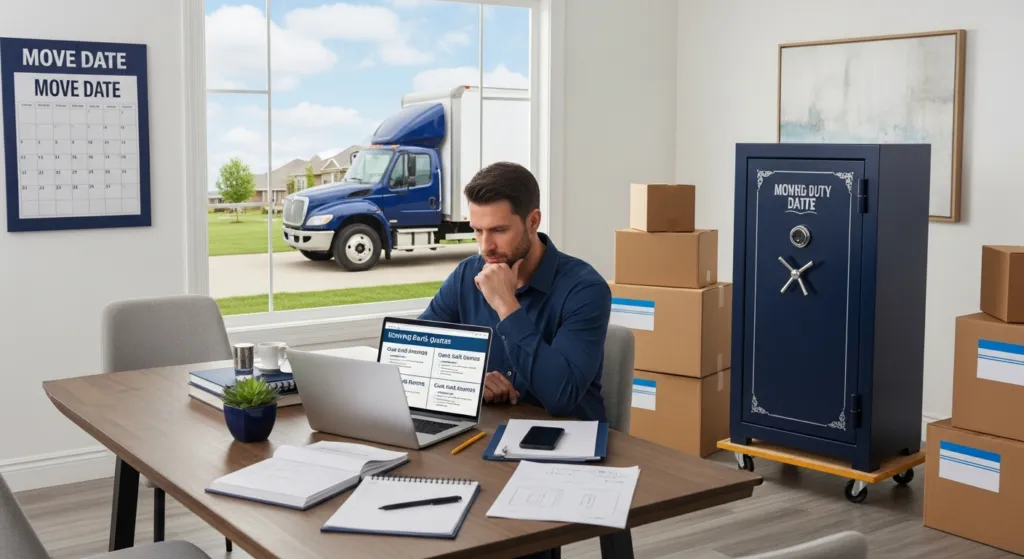
Moving a gun safe or any heavy safe is one of the trickiest parts of a residential or commercial move. Safes are dense, awkwardly shaped, and often weigh several hundred to over a thousand pounds. Done poorly, moving a safe can lead to crushed fingers, damaged stairs, cracked floors, or worse, serious injuries. Done well, it is a carefully planned operation with the right team, tools, and route.
If you are trying to figure out how to move a gun safe safely, you are not alone. Many people are unsure whether they can do it themselves, what equipment they need, what a safe moving cost looks like, and when it is time to hire professional heavy safe movers instead of relying on friends and a pickup truck.
This guide walks through everything you need to know before moving a safe: how to measure and plan, which risks to watch for, how to prepare the safe itself, what equipment is typically used, how professional safe movers work, and how to compare moving quotes for this type of specialty item through a marketplace like Moving US Van Lines.
By the end, you will understand the pros and cons of DIY vs. professional help, realistic safe moving cost factors, and a step-by-step process to keep people, property, and your safe protected on moving day.
Key takeaways
- Moving a gun safe is a high-risk task that can damage your home and seriously injure people if it is not planned correctly.
- Before contacting movers, document your safe\’s size, weight, contents, and access conditions (stairs, tight turns, surfaces).
- Professional heavy safe movers use specialized tools like heavy-duty dollies, stair climbers, and lift-gate trucks.
- Safe moving cost depends on weight, distance, stairs, building conditions, and whether the safe is part of a full household move.
- Comparing multiple quotes through a marketplace like Moving US Van Lines helps you find licensed, insured movers who handle safes.
- Even if you plan a DIY move, have clear roles, protective gear, and a safe path mapped out before lifting anything.
- Ask movers specific questions about experience with safes, protection for floors and walls, valuation coverage, and what is excluded.
Why safety and compliance matter when moving a safe
Even though the search term is often just “how to move a gun safe,” the bigger issue is how to move a lot of weight in a controlled, compliant way. A typical large gun safe can weigh 500–1,000+ pounds. That weight is concentrated into a small footprint, which can easily punch through weak stairs, gouge hardwood, and pull people off balance.
Physically, a safe is nothing like moving a refrigerator or sofa. Most standard household items can be carried by two or three strong people. A heavy safe usually requires specialized handling and a detailed plan, particularly in multi-story homes, older buildings, or apartments with strict rules.
In addition to physical safety, you also need to think about regulatory and practical compliance:
- Some buildings have explicit rules for moving items over a certain weight and may require certificates of insurance or using a specific freight elevator.
- For gun safes, you must comply with all applicable firearm storage and transportation laws in your state and any states you travel through.
- Many moving companies have internal policies about moving ammunition and firearms and may require you to remove certain contents first.
Because of these issues, many people choose to work with heavy safe movers who are already set up for this type of specialty item, either as part of a larger residential move or as a standalone project.
Understanding your gun safe or heavy safe
Before you can decide whether you should move the safe yourself or hire professionals, you need a clear picture of what you are dealing with. When you are requesting safe moving cost estimates, the details matter.
Key safe characteristics to document
- Weight (approximate or exact) – Check your owner’s manual, manufacturer website, or purchase paperwork. If you cannot find it, measure external dimensions and estimate based on similar models.
- Dimensions – Height, width, and depth, including any protruding handles or hinges.
- Type of safe – Gun safe, fire safe, jewelry safe, commercial safe, floor safe, wall safe, etc.
- Location in your home or business – Main floor, basement, second floor, closet, garage, or office suite.
- Access route details – Number of stairs, turns on the staircase, tight hallways, narrow doors, or low ceilings on the path to the truck.
You do not have to be perfect, but the more precise your information, the more accurate your quotes and planning will be.
Contents and legal considerations
For gun safes, movers will typically require you to remove firearms and ammunition before they handle the safe, especially for interstate moves. Even if local regulations allow firearms to remain inside, some carriers have their own internal policies against transporting loaded or unsecured weapons.
- Remove all firearms and transport them separately, locked and unloaded, in accordance with state law.
- Remove ammunition and store or transport it according to regulations and manufacturer guidance.
- Remove valuables like jewelry, cash, or documents and keep them with you rather than in the safe during transit.
If you are not sure what is allowed, ask each mover during the quote process, and consult applicable state or federal transportation guidance for firearms and ammunition.
DIY vs. professional heavy safe movers
Once you understand the size, weight, and location of your safe, the next question is whether to move it yourself or hire professionals. There is no one-size-fits-all answer, but there are clear pros and cons to each route.
Pros and cons of DIY safe moving
| Approach | Pros | Cons |
|---|---|---|
| DIY with friends and rented equipment | Lower direct cost; flexible timing; full control over handling. | High risk of injury or damage; need to source proper equipment; may violate building rules; personal liability if something goes wrong. |
| Partial DIY (pros for stairs, you handle flat surfaces) | Pros handle most dangerous sections; can reduce cost compared with full-service; more manageable. | Still physically demanding; requires tight coordination; not all movers will agree to partial handling. |
DIY is most realistic when:
- The safe is relatively light (for example, under 300–400 lbs).
- It is on the ground floor with a clear, level path to the exit.
- You have several strong adults, proper equipment, and clear building permission.
For heavier safes, stairs, or tricky access, the potential cost of damage or injury often outweighs the savings of doing it yourself.
Benefits of hiring professional heavy safe movers
When moving a safe that weighs hundreds of pounds, hiring experienced professionals usually provides better control and predictability.
- They bring specialized equipment: heavy-duty appliance dollies, safe-moving skates, stair-climbing machines, lift-gate trucks, and protective floor coverings.
- They are trained to control the center of gravity, use leverage, and coordinate movements through tight turns and stair landings.
- They carry insurance that may help cover certain types of damage (subject to policy limits and exclusions).
- They understand building and elevator requirements and can provide certificates of insurance when needed.
If you decide professional help is the right option, a comparison platform like Moving US Van Lines can help you connect with licensed, insured movers and identify which companies regularly handle heavy or specialty items like safes.
Safe moving cost: Key factors that affect pricing
Safe moving cost varies widely. A straightforward ground-floor move across town is very different from moving a 1,000-pound safe out of a basement, up a tight staircase, and onto a truck for an interstate relocation.
When you request quotes for moving a safe, movers typically look at several core variables.
Core safe moving cost factors
| Cost factor | What it means | How it affects price |
|---|---|---|
| Weight and size of safe | Approximate weight (in pounds) and dimensions. | Heavier, bulkier safes generally cost more due to extra labor and gear. |
| Number of stairs or steps | Flights of stairs, porch steps, or basement access. | Each extra flight can increase labor, time, and risk, raising the cost. |
| Access complexity | Tight turns, narrow doors, low ceilings, or long carries. | More complex routes often require extra crew or specialized equipment. |
| Distance | Local vs. long-distance vs. interstate relocation. | Longer distance adds transportation time, fuel, and logistical planning. |
| Standalone or part of a larger move | Whether the safe is the only item or part of a full household or office move. | Standalone safe moves may have minimum charges; bundled moves sometimes spread cost across the shipment. |
Movers may charge by the hour (common for local moves) or based on a combination of weight and distance (common for interstate moves), plus surcharges for heavy items like safes.
Additional charges you might see
- Stair fees beyond a certain number of steps or flights.
- Long carry charges if the truck cannot get close to your door.
- Hoisting, craning, or rigging fees if a safe cannot fit through standard access points.
- Additional labor for extremely heavy safes or tight spaces.
- Fees for protective materials, such as Masonite for floors, wall padding, or doorway protection.
Because safe moving cost is so situational, it is smart to compare multiple quotes rather than assuming one number applies to all scenarios.
How to prepare before requesting safe moving quotes
Whether you intend to move the safe yourself or hire pros, preparing before requesting quotes will save time and lead to more accurate pricing. Movers will ask many of the same questions, and having answers ready keeps the process efficient.
Information to gather for movers
- Safe brand and model (if known).
- Approximate weight and dimensions.
- Current location in the building (e.g., basement, first floor, second floor).
- Destination location (room and floor) at the new place.
- Number of stairs at both origin and destination, including porch steps.
- Details of tight turns, door widths, and elevator access.
- Whether the safe will be empty or contain non-restricted items.
- Your preferred move dates and whether timing is flexible.
Sample wording when contacting movers:
“I have a gun safe that is approximately 60″ high, 30″ wide, 25″ deep, weighing around 700 pounds. It is currently in my basement, with one straight flight of stairs to the ground floor and a tight turn at the top. I need it moved to my new house 20 miles away, into a first-floor office with no stairs. Can you handle this type of safe, and what information do you need for a quote?”
Photos and videos
Many movers appreciate photos or even a short video of the safe and the route they will need to use. This helps them spot potential challenges before they arrive and quote more accurately. Take clear photos of:
- The safe from the front and side, including handles and hinges.
- The staircase, showing width and railings.
- Any tight hallways or doorways.
- The entry door and driveway or parking situation.
Timing your quote requests
If the safe is part of a larger home or office move, try to request quotes at the same time for everything. Using a marketplace like request moving quotes through Moving US Van Lines allows you to submit your move details once and compare multiple responses side by side.
For a standalone safe move, give movers at least 1–2 weeks when possible, especially if you live in a busy metro area or are moving at the end of the month or peak season.
How to compare safe moving estimates
Once you receive quotes from heavy safe movers or full-service moving companies, do not focus solely on the bottom-line price. Look at what is included, who will be doing the work, and how well the mover’s experience matches your safe and home conditions.
Key elements to review in each quote
| Quote element | What to look for | Questions to ask |
|---|---|---|
| Service description | Does it explicitly mention moving a safe or heavy item? | “Is this quote specifically for moving my safe, including stairs and all access points?” |
| Inclusions and exclusions | Floor protection, wall protection, disconnection or bolting, valuation coverage. | “What protections are included, and what is excluded or extra?” |
| Pricing structure | Flat rate vs. hourly rate vs. weight/distance-based. | “Is this a firm price, or can it change on moving day, and under what conditions?” |
| Mover experience | Specific mention of safe or piano/heavy-item experience. | “How often do you move gun safes or heavy commercial safes?” |
When you compare multiple quotes side by side, note which movers ask smart follow-up questions about access and building rules. That is often a sign they understand the complexities of moving a safe, not just standard furniture.
Using a marketplace to compare safely
One advantage of using a comparison platform like compare licensed movers through Moving US Van Lines is that you can submit your move details once and then review multiple movers’ responses. This makes it easier to compare safe moving cost, services, and availability without repeating the same information over and over.
Example comparison approach:
- Line up at least three quotes that explicitly address moving a safe.
- Highlight any stair, access, or special equipment fees to make sure you are comparing “apples to apples.”
- Look at both price and mover fit: experience, responsiveness, and clarity of terms.
Step-by-step: How to move a gun safe with help
If, after comparing your options, you still choose to move a safe on your own, proceed with extreme caution. The following step-by-step outline is not a substitute for professional training, but it can help you understand the process and decide whether DIY is truly worth the risk.
1. Plan the path
- Walk the entire route from the safe’s starting point to the exit and then to the vehicle.
- Measure doorways and hallways to confirm there is clearance for the safe and equipment.
- Identify any tight turns, low ceilings, or thresholds that could catch wheels.
- Clear obstacles like rugs, boxes, decor, or low furniture.
2. Prepare the safe
- Remove all firearms, ammunition, and valuables.
- Lock the door securely and, if possible, tape the handle to prevent accidental movement.
- If the safe is bolted to the floor, carefully unbolt it using proper tools, keeping hardware in a labeled bag.
- Consider wrapping the safe in moving blankets and securing them with stretch wrap or straps to protect surfaces.
3. Gear up
Minimum recommended equipment for moving a heavy safe includes:
- Heavy-duty appliance dolly or safe dolly with high weight rating.
- Straps or ratchet tie-downs to secure the safe to the dolly.
- Work gloves with good grip, closed-toe shoes or boots, and back braces if needed.
- Floor protection materials (e.g., Masonite or plywood sheets) for vulnerable surfaces.
- At least three to four capable adults for heavy safes; more if stairs are involved.
4. Load the safe onto the dolly
- Tip the safe slightly and slide the dolly under it from the side, keeping center of gravity low.
- Secure the safe tightly to the dolly with straps; double-check that nothing can shift.
- Keep one person in charge of calling out commands, and ensure everyone understands the plan.
Simple communication examples:
- “On three we tilt. One, two, three.”
- “Stopping at the landing. Everyone ready? Slow step down.”
5. Navigating stairs
Stairs are the most dangerous part of moving a safe and are where many DIY attempts go wrong. If your safe must go up or down stairs, it is often much safer to hire professional heavy safe movers.
If you still attempt it yourself:
- Use strong people at both the high and low ends of the dolly, not just below the safe.
- Move one step at a time, maintaining constant control and communication.
- Use stair-climbing equipment if available rather than trying to carry the full weight.
- Stop and rest on landings; never rush.
6. Loading into the vehicle
- A lift-gate truck is strongly recommended for heavy safes.
- Roll the dolly onto the lift gate, keep everyone clear of potential pinch points, and slowly raise the platform.
- Once inside the truck, position the safe against a wall and secure it with heavy-duty straps to prevent movement in transit.
7. Unloading and placing the safe at destination
- Repeat the path-planning process at the new address before unloading.
- Protect floors and walls before moving the safe inside.
- Roll and, if necessary, maneuver the safe into final position with slow, controlled movements.
- Re-bolt the safe to the floor if required and permitted by your building and local codes.
Even when everything goes right, moving a safe yourself is physically demanding and carries real risks. Many people who start planning a DIY move decide to compare professional options once they see what is involved.
Building, flooring, and access considerations
How to move a gun safe safely depends heavily on the building and site conditions at both origin and destination. Movers will ask about these details because they affect both feasibility and cost.
Floors and structural support
Safes concentrate a lot of weight onto a small area. On some floors, especially older wood structures or raised platforms, this can create structural concerns.
- Ask if your safe’s current location is on a slab, standard frame construction, or another type of support.
- Be cautious about placing very heavy safes on upper floors without confirming the structure can handle the load.
- Movers may recommend specific paths or positioning to avoid weak areas.
Surface protection
Heavy safes can scratch or dent hardwood, tile, and luxury vinyl planks.
- Use protective runners, Masonite, or plywood sheets to spread weight on delicate surfaces.
- Ensure protection extends fully along the planned route, including door thresholds.
- Confirm with your mover what surface protection they provide versus what you should prepare.
Elevators, stairwells, and building rules
For apartments, condos, or offices, access rules can be as important as physical constraints.
| Access element | Why it matters | What to verify |
|---|---|---|
| Elevator size and weight rating | Not all elevators can accommodate or support a heavy safe and crew. | Freight elevator availability, dimensions, and load limits. |
| Stairwell width and railings | Narrow stairwells or fixed railings may block the safe completely. | Clear measurements, including railings and overhangs. |
| Building move rules | Windows of time, COI requirements, and loading dock restrictions can affect scheduling. | Required move hours, reservations, and any weight or item restrictions. |
Before moving a safe, contact property management at both locations to confirm any special requirements. Movers will appreciate having this information up front.
Questions to ask before booking safe movers
Once you have a shortlist of movers who seem like a good fit, ask a few targeted questions to confirm their experience and clarify expectations. This helps you choose the right company, not just the lowest safe moving cost.
- “How often do you move gun safes or heavy safes of similar weight to mine?”
Look for movers who handle heavy items regularly, not just occasionally. - “What equipment will you use for my safe?”
Dollies, stair climbers, lift-gate trucks, and surface protection are good signs. - “Is there an additional charge specifically for moving the safe?”
Make sure this is included in the written estimate, not added at the last minute. - “How do you protect floors, walls, and doorways?”
Ask about blankets, padding, runners, and Masonite. - “What valuation or coverage do you provide if the safe or property is damaged?”
Understand any limits, deductibles, or exclusions. - “Are firearms and ammunition allowed in the safe during the move?”
Most movers require them to be removed; confirm company policy and legal compliance. - “What information do you need from me before move day?”
Professional movers will request details about access, building rules, and timing.
As you compare answers, you will quickly see which companies take safe moving seriously and which treat it like an ordinary piece of furniture.
How Moving US Van Lines helps with heavy safe moves
Moving US Van Lines is a moving quote comparison platform designed to help you connect with licensed and insured movers across the U.S. If you are planning a move that includes a gun safe or other heavy safe, using a marketplace can save time and provide more confidence that you are choosing the right team.
Instead of calling multiple companies one by one, you can share your move details once and then review responses from movers that fit your needs. For safe moves, that might include:
- Residential moving companies that regularly handle gun safes as part of household moves.
- Commercial moving companies experienced with office or bank safes.
- Full-service movers that offer packing and specialty item handling along with transportation.
Helpful Moving US Van Lines resources
Using these resources, you can compare movers by move type, read top moving company guides, and narrow down your options before booking. For moves that include a heavy safe, this can make the difference between a routine operation and a stressful last-minute scramble.
What to keep with you on safe moving day
Even if professionals are doing the heavy lifting, you still have an important role on moving day. Keeping certain items and information handy will help the safe move run smoothly.
- Keys or combination information – You do not usually need to open the safe during the move, but you should have access details with you rather than packed away.
- List of removed contents – If you removed firearms, ammunition, or valuables, keep an inventory so you can confirm everything arrives at the new location.
- Building contacts – Property managers, front desk staff, or maintenance contacts at both locations.
- Move permits or elevator reservations – If required by your building or city.
- Protective materials – Any floor protection or doorway covers you agreed to supply.
- Payment method and documentation – Copy of the estimate, confirmation email, and payment arrangements.
Stay available to answer movers’ questions about the route, building rules, and final placement of the safe. The more clearly you communicate, the more efficiently they can work.
Common safe moving mistakes and how to avoid them
When people search for how to move a gun safe, they often underestimate the complexity of the job. Being aware of common mistakes can help you avoid expensive or dangerous missteps.
| Common mistake | What can go wrong | How to prevent it |
|---|---|---|
| Underestimating weight and risk | Injuries, dropped safes, damaged stairs or floors. | Get accurate specs; consider professional heavy safe movers for anything beyond very light safes on flat surfaces. |
| Not planning the route fully | Getting stuck in a doorway or stairwell, causing delays and damage. | Measure all doorways, hallways, and stairs before moving day; share details with movers. |
| Leaving firearms or valuables inside | Potential legal issues, safety concerns, and higher risk of loss. | Remove firearms, ammunition, and valuables and transport them separately and securely. |
| Ignoring building rules | Fines, delays, or being blocked from using freight elevators or loading docks. | Confirm rules and requirements with building management well in advance. |
By taking time to plan and compare options, you greatly reduce the risk of these problems occurring.
Frequently asked questions
Is it safe to move a gun safe by myself?
For larger, heavier safes, moving them completely by yourself is not recommended. You should have multiple strong adults, proper equipment, and a clear path at minimum. Many people prefer to hire professional heavy safe movers for anything beyond a small, relatively light safe on a ground floor.
Do movers allow firearms to stay inside the safe?
Policies vary by mover and by move type. Many movers require you to remove firearms and ammunition before they handle the safe, especially for long-distance or interstate moves. Always confirm the mover’s policy and follow applicable firearm transportation laws.
How much does moving a safe usually cost?
Safe moving cost depends on weight, access complexity, distance, and whether the safe is part of a larger move. Expect higher costs for very heavy safes, multiple flights of stairs, or long-distance moves. Comparing quotes from multiple movers through a platform like Moving US Van Lines can give you a realistic range for your specific situation.
Can any moving company handle a gun safe?
Not every moving company is equipped or willing to move very heavy safes. Some focus on standard household items and may decline safes above a certain weight or with complex access. When requesting quotes, specifically ask about experience with gun safes or heavy safes.
What equipment do professionals use to move a safe?
Professional heavy safe movers often use heavy-duty dollies, safe skates, stair-climbing machines, lift-gate trucks, straps, and protective floor coverings. They also rely on trained crews who understand how to control weight and maneuver through tight spaces.
Should I bolt my safe to the floor in the new home?
Many gun safe owners choose to bolt their safe to the floor for security and stability, subject to local building rules and floor construction. If you plan to do this, confirm with your mover whether they handle bolting or if you should hire a specialist or follow manufacturer instructions yourself.
How far in advance should I book safe movers?
For local moves, aim for at least 1–2 weeks ahead; for long-distance or peak-season moves, more time is better. Booking early gives you more choices and time to compare safe moving cost and services between movers.
Can movers move a safe from or to a basement?
Many heavy safe movers can handle basements, but it depends on stair design, ceiling height, and weight. In some cases, it may not be feasible or may require specialized rigging. Provide detailed information and photos when requesting quotes so movers can assess feasibility.
Do I need special insurance to move a gun safe?
Movers typically offer standard valuation options, but coverage may be limited and subject to exclusions. For high-value contents that you remove from the safe, you may want to consult your insurance provider about coverage during transit.
How can I reduce the cost of moving a safe?
You may save money by scheduling the safe move as part of a larger household or office move, having flexible dates, providing clear access, and preparing the safe and route in advance. Comparing multiple movers and clarifying exactly what is included also helps avoid surprise charges.
Sources referenced in this guide
Information in this guide is based on common industry practices, typical moving company policies, and publicly available guidance from several types of sources, including:
- Federal Motor Carrier Safety Administration consumer guidance on household moves.
- U.S. Department of Transportation moving and transportation guidance.
- State transportation and consumer protection agency information on movers and building access rules.
- Written moving estimates, bills of lading, and standard moving tariffs related to heavy and specialty items.
- Manufacturer recommendations for gun safes and fire safes regarding handling, placement, and floor support.
- Building management move-in and move-out rules for elevators, loading docks, and heavy items.
Always refer to your specific mover’s documentation, your building’s rules, and applicable state and federal laws for the most accurate and current requirements.
Once you understand how to move a gun safe safely and what affects safe moving cost, the next step is to decide whether to hire professionals. If you want to compare options efficiently, you can use Moving US Van Lines to compare licensed movers, compare movers by move type, and review top moving company guides before you book. When you are ready, you can request moving quotes and discuss your safe, access conditions, and timing with movers who are prepared to handle heavy items.
This guide is general moving information, not legal, insurance, or regulatory advice. Moving requirements, pricing, access rules, availability, and coverage options may vary by location, move type, mover, building rules, and service agreement.
Data journalist compiling review scores and complaint records for our rankings.
More from the blog
Compare movers by service
Where to find us
Compare quotes from licensed movers
Submit your move details once and receive custom quotes — all at no cost.