
What Is a Bill of Lading and Why It Matters

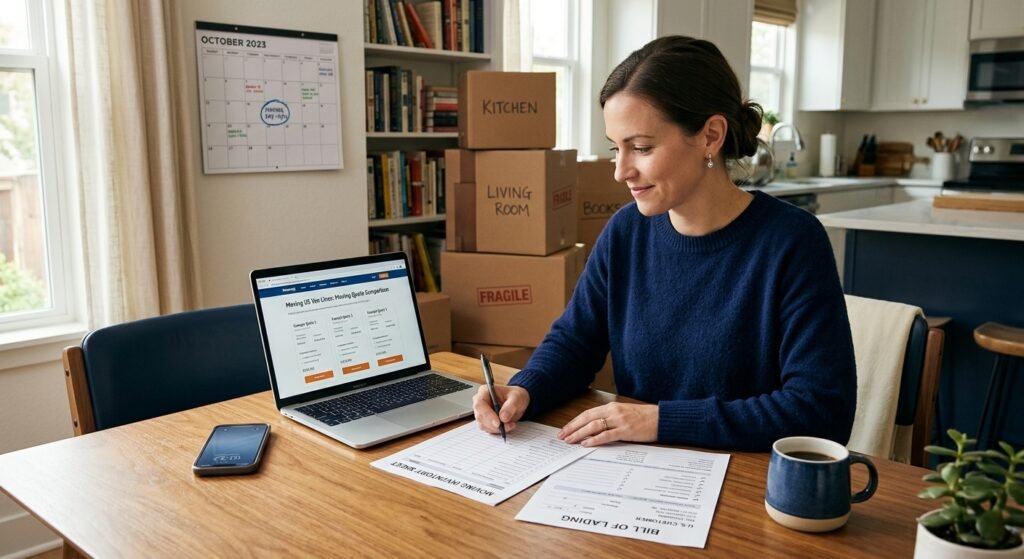
When you move with a professional moving company, you will sign a stack of paperwork. The most important of all is the bill of lading. This single document controls your dates, your price, your responsibilities, and what happens if something goes wrong. Yet many people sign it in a rush without really understanding it.
If you are planning a move and comparing moving companies, taking time to understand the bill of lading for moving will help you choose the right mover, spot red flags, and avoid surprises on moving day or delivery. It is the legal contract between you and the mover, not just a receipt.
This guide explains what a bill of lading is, how it connects to your estimate and moving contract, what should be on it, and how to read it line by line. You will also learn how to compare bills of lading between movers and how Moving US Van Lines can help you review options before you sign anything.
Whether you are booking a small local move or a long-distance interstate relocation, understanding the moving bill of lading, your inventory sheet, and all supporting documents will make your move safer, clearer, and less stressful.
Key takeaways
- The bill of lading for moving is your primary legal contract with the mover, controlling price, dates, and responsibilities.
- Never treat the moving bill of lading as a quick receipt; read it fully, compare it to your estimate, and ask questions before signing.
- Details like valuation coverage, access conditions, and extra services must be written on the bill of lading, not just mentioned verbally.
- Your inventory sheet, condition notations, and weigh tickets (for interstate moves) work together with the bill of lading to define your move.
- Comparing estimates from multiple licensed movers side by side makes it easier to see how each bill of lading will look and what you are really paying for.
- Keep your copies of the bill of lading and inventory with you during the move and use them if you need to file a claim or dispute charges.
- Moving US Van Lines helps you compare licensed and insured movers so you can review services, pricing structures, and contract terms before you decide.
What is a bill of lading in moving?
In the moving industry, the bill of lading is the official written contract for the transportation of your household or commercial goods. It is usually generated at the time of loading and must be signed by both you (or your representative) and the driver or moving company representative.
At its core, the bill of lading for moving does three things:
- Acts as a contract between you and the mover
- Serves as a receipt for your goods
- Functions as a document of title that controls who can receive your shipment
The exact layout and language vary by mover and by whether your move is local, intrastate, or interstate, but most bills of lading include similar sections:
- Shipper and destination information
- Pickup and delivery addresses and contact numbers
- Agreed dates, service windows, or delivery spreads
- Type of estimate (binding, non-binding, not-to-exceed, etc.)
- Rates, charges, and payment method
- Valuation coverage chosen (released value or higher coverage)
- References to the inventory sheet and any access or packing notes
- Signatures and special terms or addendums
The bill of lading moving document is not optional. For regulated interstate moves, federal rules require that the mover issue one and that you receive a copy. For local and intrastate moves, state and company policies usually require similar documentation.
Bill of lading vs. moving contract vs. estimate
People often use «moving contract» and «bill of lading» as if they are the same thing, but there are subtle differences. Understanding how they fit together helps when you are comparing movers and estimates.
Estimate
Your estimate is the mover’s initial offer. It outlines expected services and projected costs based on the information you provided. You may see several types of estimates:
- Non-binding: Final charges are based on actual weight/time, not the estimate.
- Binding: Price should not change as long as the scope of work does not change.
- Not-to-exceed (or binding-not-to-exceed): You pay the lower of the estimate or actual charges, but not more than the cap.
The estimate is critical when comparing companies, but it is not usually the final contract. That is where the moving bill of lading comes in.
Moving contract and bill of lading
The term «moving contract» often refers to the combination of:
- Your signed estimate or order for service
- The bill of lading
- Any addendums that describe services, building rules, or storage
In many cases, the bill of lading incorporates the estimate and other documents by reference. For example, the bill of lading may state that it is subject to the terms in your estimate and the mover’s tariff or terms and conditions.
Practically speaking, when you sign the bill of lading, you are signing the entire moving contract. That is why reviewing the bill of lading moving document on loading day is as important as reviewing the estimate when you book.
Why your bill of lading matters so much
The bill of lading controls what happens if there are disagreements, delays, damages, or extra charges. When issues arise, both you and the mover will go back to the bill of lading and related paperwork to see what was agreed.
Here is why the moving bill of lading matters:
- It defines the scope: What exactly is being moved, from where, to where, and with what services (packing, stairs, long carries, etc.).
- It sets the price structure: Whether you are paying by weight, hourly, flat rate, or a combination, and what extra charges may apply.
- It documents valuation: The level of liability the mover accepts for loss or damage and how claims are handled.
- It confirms timing: Pickup and delivery dates or spreads, and any service requirements.
- It allocates responsibilities: Who handles packing, disconnections, parking permits, elevator reservations, and more.
When you compare moving companies, you are really comparing the bill of lading you will eventually sign, even if you only see the estimate at first. A low estimate from a mover with vague or one-sided terms in the bill of lading may be riskier than a higher quote from a mover with clear, balanced terms.
What to prepare before requesting quotes
The better information you provide when you request quotes, the more accurate your estimates and final bill of lading will be. This preparation also makes it easier to compare movers side by side.
Create a clear inventory
Your inventory does not need to be perfect, but it should cover major items and give a sense of volume. This helps the mover estimate time or weight and anticipate special handling needs.
- List large furniture (beds, sofas, dressers, desks, tables)
- Estimate the number of boxes by room
- Note unusually heavy or delicate items (pianos, safes, artwork)
- Mention outdoor items (grills, patio sets, tools)
- Include storage units, basement, attic, or off-site items
Clarify access and conditions
Access challenges can affect the final bill of lading moving charges if they are not disclosed early. Note:
- Number of flights of stairs at origin and destination
- Elevator access and any building move rules
- Distance from parking to unit or house
- Truck access restrictions or need for a shuttle truck
- Parking permits or loading dock reservations
Decide what services you want
Knowing your preferred service level helps movers price your job correctly:
- Full packing vs. partial packing vs. self-packing
- Disassembly and reassembly of furniture
- Appliance services (disconnect/reconnect)
- Crating for artwork or glass
- Short-term or long-term storage
When you use a comparison platform such as Moving US Van Lines, entering this information once allows multiple licensed movers to quote based on the same details, making it easier to see how the eventual bills of lading are likely to differ.
What affects moving quotes and your bill of lading
The estimate you receive and the final charges on your bill of lading are influenced by several predictable factors. Understanding them helps you evaluate pricing and avoid surprises.
| Cost factor | How it appears on the bill of lading | What to watch for |
|---|---|---|
| Distance | Rate per mile or linehaul charge for interstate; travel time for local | Confirm origin/destination cities and any shuttle or extra stops |
| Shipment size/weight | Estimated weight, cubic feet, or number of crew hours | Check how extra items or heavier weight will be charged |
| Service level (packing, etc.) | Line items for packing, materials, crating, and unpacking | Confirm which items are packed by mover vs. packed by you |
| Access challenges | Stair fees, long carries, elevators, shuttle truck charges | Ensure realistic access notes based on both addresses |
| Time of year and date flexibility | Seasonal rates, weekend surcharges, or specific date fees | Ask if flexible dates or midweek moves lower costs |
| Valuation coverage | Released value or full value with declared amount and deductible | Understand the coverage level and any additional charges |
When comparing movers, look at how each factor translates into their estimate and how you expect it to appear on the final bill of lading moving paperwork. A clear explanation at quote stage usually leads to clearer documents later.
How to read a bill of lading line by line
On moving day, you may feel rushed as the crew arrives and begins preparing. This is precisely when you should slow down and read the bill of lading carefully before signing. Here is a structured way to review it.
1. Shipper and contact details
- Your full name and contact information
- Pickup and delivery addresses
- Alternate contact person and phone numbers
Make sure everything is accurate. Even small mistakes, like a wrong apartment number or phone digit, can lead to delays or confusion.
2. Dates and service windows
- Pickup date and any time window
- Delivery date or delivery spread for long-distance moves
- Notes on guaranteed or preferred dates
Sample wording you might confirm with the mover: «This shows a delivery window of June 10–14. Can you confirm that is the full spread and there are no different dates in your system?»
3. Estimate type and pricing structure
This section tells you whether the bill of lading is based on a binding, non-binding, or not-to-exceed estimate and how extra charges will be calculated.
- Label for estimate type
- Hourly rate for local moves or per-pound/per-mile charges for interstate moves
- Minimums, overtime rates, or fuel surcharges if applicable
Compare this directly to your written estimate. If the estimate said «binding» but the bill of lading says «non-binding,» stop and clarify before signing.
4. Services included
There is usually a section or addendum listing services covered by your price:
- Number of movers and trucks
- Packing or unpacking services
- Furniture disassembly/reassembly
- Use of pads, blankets, and basic protection
- Appliance handling or crating
Anything important to you should appear in writing, not just as a verbal assurance.
5. Valuation coverage
This is one of the most misunderstood sections of the bill of lading moving paperwork. It is not the same as insurance, but it sets how much the mover is liable for if something is lost or damaged.
Typically, you will choose between:
- Released value: Basic coverage at a low rate per pound per article (often at no extra charge).
- Full-value protection: Higher coverage based on a declared value of your shipment, sometimes with a deductible.
Confirm that the box for the option you choose is correctly checked and that any declared value or deductible is filled in. If you upgrade coverage, the additional charge should be written clearly.
6. Payment terms
- Accepted payment methods (cashier’s check, credit card, etc.)
- When payment is due (pickup, delivery, or split)
- Any deposits already paid and remaining balance
Sample wording to clarify: «This shows the balance due in full at delivery via cashier’s check. Are there any other fees that could be due at that time beyond what is listed here?»
7. Special terms and addendums
Look for references to:
- Tariffs or terms and conditions documents
- Waivers for certain items (e.g., pressboard furniture, particleboard)
- Building or HOA rules that affect timing or access
- Storage-in-transit (SIT) terms and fees
Ask for copies of any referenced documents if you have not already received them. They are part of your moving contract.
Inventory sheet and condition reports
Along with the bill of lading, the inventory sheet moving crews prepare is one of your most important documents. It lists the items being moved and their apparent condition at pickup.
How the inventory sheet works
For many interstate and larger moves, the crew will:
- Assign numbered tags to each item or box
- List them on a multi-page inventory form
- Use condition codes (scratches, dents, wear, etc.)
- Ask you to sign the inventory acknowledging the recorded condition
At delivery, you or your representative will check items off as they are unloaded and note any new damage or missing pieces on the inventory or delivery paperwork.
Using inventory with the bill of lading
The inventory sheet and bill of lading reinforce each other:
- The bill of lading typically references the inventory numbers and total pieces.
- Claims for loss or damage often rely on the inventory as evidence of what was tendered to the mover.
- Discrepancies between the two documents can complicate disputes.
When comparing movers, ask how detailed their inventory process is and how they expect you to review and sign off. A careful inventory process is usually a good sign of a professional operation.
| Document | Main purpose | Key tips for customers |
|---|---|---|
| Bill of lading | Legal contract for transportation and charges | Read fully, confirm estimate type, dates, and valuation choices |
| Inventory sheet moving form | List of shipped items and their condition | Walk through with crew, question excessive damage codes |
| Order for service / estimate | Initial description of services and pricing method | Keep a copy and compare every line to the bill of lading |
How to compare bills of lading between movers
When you receive multiple estimates through a platform like Moving US Van Lines or by contacting movers individually, you are not just comparing prices. You are also comparing the likely terms of the bill of lading each mover will present on moving day.
Step-by-step comparison process
Use this simple timeline to compare quotes and anticipate how each moving bill of lading might look:
| Stage | Typical timing | What to focus on |
|---|---|---|
| Request quotes | 4–8 weeks before move (earlier in peak season) | Provide the same inventory and access details to all movers |
| Review estimates | Within 1–3 days of requests | Compare estimate type, services included, and exclusions |
| Ask contract questions | Before booking | Request sample bill of lading and terms, clarify valuation options |
| Book mover | After you compare at least 2–3 movers | Confirm in writing your dates, estimate type, and key services |
| Sign bill of lading | On moving day at pickup, and sometimes at delivery | Carefully review every section before signing; keep a copy with you |
Key comparison points
- Estimate type: Are you comparing non-binding from one mover to binding from another? The risk profile is different.
- Valuation options: Does one mover include full-value protection while another quotes basic coverage only?
- Included services: Packing, disassembly, and long carries can significantly affect your final bill of lading moving charges.
- Payment terms: Are there large deposits, cash-only requirements, or unclear refund rules?
- Dispute and claims process: How and when must you report issues? What timelines apply?
As you compare, it may help to use simple notes like:
- Mover A: Binding not-to-exceed, includes basic packing materials, full-value protection optional.
- Mover B: Non-binding, lower base rate but lots of potential add-ons.
Seeing these differences side by side, especially when you collect quotes through a comparison tool, makes it easier to choose the mover whose contract and bill of lading terms match your risk tolerance and budget.
Helpful Moving US Van Lines resources
Key questions to ask before you sign
Before you finalize your mover and sign the bill of lading, ask direct, specific questions. A reputable mover will answer clearly and provide documentation.
- What type of estimate will my bill of lading be based on?
- Can you send me a sample bill of lading and your terms and conditions?
- How do you handle additional services on move day that were not in the estimate?
- What valuation options are available, and what are the costs and deductibles?
- Are there any items you will not move, or that are moved at limited liability?
- What is the process and time frame for filing a claim if something is lost or damaged?
- How do you document the inventory and condition of my items?
- What are your payment terms, and are deposits refundable under certain conditions?
Sample wording:
«Before I book, I would like to review your standard bill of lading and any addendums that will apply to my move. Can you email those along with my estimate so I can review everything together?»
Common bill of lading mistakes and how to avoid them
Many moving problems trace back to misunderstandings or oversights in the bill of lading moving paperwork. Here are frequent mistakes and how to prevent them.
| Common mistake | Potential consequence | How to avoid it |
|---|---|---|
| Signing without reading all pages | Unexpected fees, dates, or terms hidden in fine print | Sit down, read every page, and ask questions before signing |
| Accepting different terms than the estimate | Losing protections you expected based on the quote | Compare the moving contract and estimate line by line |
| Leaving valuation options blank or defaulted | Lower coverage than you thought, limited compensation for damage | Actively choose and initial your valuation selection |
| Ignoring access notes or special services | Surprise charges for stairs, long carries, or shuttles | Ensure realistic access descriptions on the bill of lading |
| Not keeping a copy with you | Harder to dispute charges or document a claim later | Keep digital and paper copies separate from the shipment |
- Do not rush because the crew is waiting; you are entitled to enough time to read.
- Do not sign blank or incomplete sections; ask the mover to fill them in first.
- Do not rely on verbal promises; have everything important written on the bill of lading or a signed addendum.
- Do not feel pressured by last-minute changes; it is okay to pause and call the office for clarification.
Local vs. interstate and commercial moves
Your bill of lading moving paperwork may look different depending on the type of move and which regulations apply.
Local and intrastate residential moves
- Often billed hourly with a minimum number of hours
- Travel time or a flat truck fee may be included
- State-specific consumer protection rules may apply
For these moves, you may see a simpler form, but it should still clearly show rates, estimated hours, services, and valuation choices.
Interstate household moves
- Usually billed based on weight and distance
- Federal rules require certain information be included
- Delivery windows or spreads are common
Expect a more detailed bill of lading, often with references to federal regulations and standardized valuation options.
Commercial moves
Commercial moves, such as office relocations, can involve customized contracts and more complex bills of lading that address:
- After-hours or weekend work
- Specialized equipment transportation
- Building and elevator coordination
- IT and equipment disconnection/reconnection
If you are planning a commercial move, using resources like commercial moving companies guides can help you find movers familiar with these requirements and documentation.
| Move type | Typical billing basis | Bill of lading focus areas |
|---|---|---|
| Local residential | Hourly rate, truck fee, materials | Crew size, minimum hours, overtime rules, valuation |
| Interstate residential | Weight + distance + services | Estimate type, delivery spread, valuation, inventory |
| Commercial | Project or hourly, sometimes phased | Phasing, downtime, building rules, specialized equipment |
Moving day: What to keep with you
On moving day and during transit, you should keep certain documents and items with you, not packed on the truck.
Essential documents to keep handy
- Signed bill of lading (pickup copy and, later, delivery copy)
- Moving estimate and any addendums
- Inventory sheet moving paperwork and condition notes
- Emails or written confirmations of dates, prices, and services
- Contact information for the driver and moving company office
- Records of payments, deposits, or receipts
Other items to keep with you
- Passports, IDs, birth certificates, and important personal records
- Medications, medical devices, and basic first-aid items
- Valuables such as jewelry, small electronics, and sensitive documents
- Basic tools, chargers, and a small «first-night» box
- Snacks, water, and comfort items for kids or pets
Think of the moving bill of lading and related documents as your move’s control center. If questions or concerns arise, you have everything you need in one place.
How Moving US Van Lines helps you compare movers
Understanding a bill of lading moving contract is easier when you are working with licensed, insured movers who are transparent about their pricing and paperwork. That is where Moving US Van Lines can help.
Instead of calling movers one by one, you can share your move details once and compare options from multiple companies that meet your needs. This saves time and gives you a clearer view of how different movers handle:
- Estimate types and pricing structures
- Valuation coverage options and coverage levels
- Included and optional services like packing, storage, or specialty handling
- Scheduling, delivery windows, and communication practices
With that side-by-side perspective, you can focus not only on price, but also on how each mover’s bill of lading and moving contract will look and feel when it is time to sign. This helps you choose a mover whose paperwork matches your expectations, not just your budget.
If you are ready to compare, you can use Moving US Van Lines to compare licensed movers, request moving quotes, or compare movers by move type whether you are planning a local, interstate, residential, or commercial move.
Frequently asked questions
What is a bill of lading in moving?
A bill of lading in moving is the written contract between you and the moving company for transporting your belongings. It sets the terms for pricing, services, dates, and the mover’s responsibilities, and it acts as a receipt and document of title for your shipment.
Is a moving bill of lading the same as a moving contract?
The bill of lading is a key part of your moving contract, but the full contract may also include your estimate, order for service, and other addendums. When you sign the bill of lading, you are typically agreeing to all referenced documents.
When do I sign the bill of lading?
You usually sign the bill of lading at pickup after the crew arrives and before loading begins, and sometimes again at delivery. Always read it carefully and compare it to your estimate before signing.
What should be on a bill of lading for movers?
A proper bill of lading should show your name and addresses, pickup and delivery dates, estimate type, rates and charges, valuation coverage, special services, references to the inventory sheet, and signatures from you and the mover.
How does the inventory sheet relate to the bill of lading?
The inventory sheet moving form lists your items and their condition at pickup. The bill of lading generally references the inventory and shipment details. Together, they help document what was moved and support any claims for loss or damage.
Can the mover change the bill of lading on moving day?
Legitimate updates can happen if the scope of the move changes, but major differences from your estimate should be explained clearly. Do not sign a revised bill of lading you do not understand or agree with.
What happens if I refuse to sign the bill of lading?
If you refuse to sign, the mover may decline to perform the move until terms are resolved. Use this point to ask questions and negotiate clarifications, not to rush. You should never sign a document you are not comfortable with.
How do I use the bill of lading if there is damage or a dispute?
If there is damage, note it on the delivery paperwork or inventory at the time of delivery and keep your bill of lading handy. The bill of lading and inventory provide the framework for filing a claim and show what coverage and deadlines apply.
Do local moves require a bill of lading?
Most professional movers issue some form of bill of lading or move contract, even for local moves. The format may be simpler, but you should still expect written terms covering rates, services, and valuation.
How can I compare bills of lading between different movers?
Start by comparing estimates and asking each mover to explain how those estimates translate into their standard bill of lading. Using a comparison tool like Moving US Van Lines to gather quotes can make differences in pricing, services, and contract terms easier to see.
Sources referenced in this guide
This guide is based on common industry practices and consumer guidance from several authorities, including:
- Federal Motor Carrier Safety Administration consumer guidance for household goods moves
- U.S. Department of Transportation moving guidance for interstate carriers and shippers
- State transportation and consumer protection agencies that regulate intrastate movers
- Written moving estimates, orders for service, bills of lading, and carrier tariffs used in the moving industry
- Building management move-in and move-out requirements that affect access, timing, and fees
This guide is general moving information, not legal, insurance, or regulatory advice. Moving requirements, pricing, access rules, availability, and coverage options may vary by location, move type, mover, building rules, and service agreement.
When you are ready to take the next step, use Moving US Van Lines to compare licensed movers, request moving quotes, and review top moving company guides so that your next bill of lading is clear, fair, and aligned with your expectations.
Auto-transport and container-move analyst for cross-country relocations.
More from the blog
Compare movers by service
Where to find us
Compare quotes from licensed movers
Submit your move details once and receive custom quotes — all at no cost.