
Moving Truck Parking and Permits: What You Need to Know

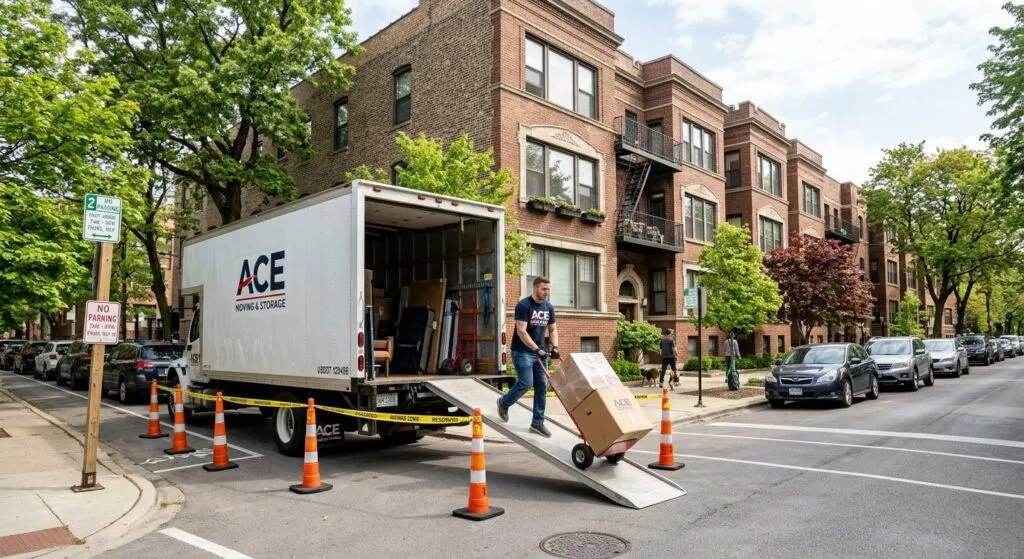
You don’t really think about a moving truck permit until you’re standing on the sidewalk, your movers are idling with the meter running, and there isn’t a legal place within two blocks to park a 26-foot truck.
At that point, it’s too late. You either risk a ticket, block someone’s driveway, or pay for an extra hour while the crew hikes back and forth. A simple parking or street permit for moving, which can cost less than a single parking ticket, often decides which way that goes.
This guide walks through how moving truck parking rules actually play out on real streets: when you need a moving truck permit, who gets it, how to avoid tickets and towing, and what to do if your city doesn’t offer any formal no parking permit move option at all.
Why moving truck parking matters more than you think
The wrong parking setup can quietly add hundreds of dollars and hours of frustration to a move. Most people focus on hourly rates or the cost of boxes, but where the truck can legally sit may control everything that happens after the crew shows up.
Here’s what’s really at stake if you skip planning for moving truck parking:
- Extra labor time: If the truck ends up half a block away, every load takes longer. On a walk-up building, a 30–50% time increase isn’t unusual in dense areas, which shows up directly on your invoice.
- Tickets and fines: A parking ticket can erase any savings from choosing a cheaper mover. In some cities, a truck in a bus lane, bike lane, or residential permit zone can be cited or even towed during your move.
- Access problems: Emergency vehicles, neighbors, or delivery trucks may not be able to pass if your moving truck is double-parked or sticks out into an intersection.
- Building conflicts: Some condo and apartment managers won’t let movers start if permits or certificates of insurance (COIs) tied to the loading area aren’t in place.
A moving truck permit doesn’t prevent every problem, but it gives you something powerful: a reserved, legal place to put a very large vehicle for a fixed window of time.
Where moving truck permits are usually required
Rules vary by city and even by block, but there are predictable patterns. The denser and more regulated your street parking is, the more likely you’ll need a permit or special permission.
The table below compares common neighborhood types and how often a moving truck permit or structured parking plan comes into play.
| Area type | How street parking usually works | Likelihood of needing a moving truck permit |
|---|---|---|
| Dense downtown / business district | Meters, loading zones, bus/bike lanes, limited spaces | Very high – permits or loading dock reservations are common |
| Urban neighborhood (rowhouses, mixed-use) | Residential permits, alternate-side rules, crowded curb | High – many cities offer a specific street permit for moving |
| Inner-ring suburb | Driveways plus on-street parking; some HOA or overnight rules | Medium – often no formal permit, but rules on blocking or overnight stays |
| Suburban cul-de-sac / subdivision | Mostly driveways; occasional no-parking sides of street | Low – focus is on not blocking mailboxes, hydrants, or traffic |
| Rural or exurban | Private driveways and wide roads, few formal restrictions | Low – more about road conditions than permits |
Some cities require permits wherever you’re reserving public curb space; others focus only on metered or extremely busy streets. A few don’t have a specific moving truck permit at all but still ticket trucks that ignore general parking rules.
That’s why you can’t rely on what a friend did in another city. The same move that’s wide-open in a small Midwestern town might require detailed planning in Boston or San Francisco.
How a moving truck permit typically works
Even though every municipality writes its own rules, the basic idea is usually similar: you pay a fee for the temporary right to occupy part of the street, and sometimes the sidewalk or alley, during your move.
In a very simplified way, a moving truck permit usually does three things:
- Authorizes the truck to park in a specific location (or within a defined stretch of curb).
- Reserves that space during a stated time window.
- Allows you to post temporary no-parking signs so other drivers don’t take the spot.
Here’s how the practical details often play out:
- Permit zone: Some permits are for a single “bay,” maybe two car lengths, while others cover a defined number of feet or an entire block face in front of your address.
- Time window: Many cities issue permits in half-day or full-day blocks. A few let you specify exact hours. You may pay more if you need overnight space.
- No-parking signs: You’re usually required to post city-approved temporary signs ahead of time so parked cars have notice. The city may provide them or require you to print or pick them up.
- Display: The permit or confirmation must be visible on the dash or window of the moving truck, and sometimes on nearby light poles or trees.
- Enforcement: In some places, enforcement officers will ticket or tow vehicles that ignore your temporary signs; in others, the signs are more of a request than a guarantee.
Don’t assume that a permit guarantees an absolutely clear curb. It greatly improves your odds, but if a neighbor parks overnight and leaves town, you may still be stuck working around them. Good movers plan for that worst case by bringing dollies and, if allowed, a smaller shuttle truck.
Who should apply: you, the mover, or the building?
Many people assume the moving company always handles permits. Sometimes they do; often they don’t. It depends on your contract and your city.
You generally see three different approaches:
- Customer applies: Very common in smaller cities and for DIY truck rentals. The city views this as your responsibility as the resident, not the mover’s job.
- Mover applies as an add-on service: Some full-service movers, especially in big metro areas, will secure moving truck parking permits for an extra fee plus reimbursement of city charges.
- Building or property manager handles it: In large apartment complexes or condo buildings, the management office might control loading docks and adjacent curb permits and ask you to book a time slot through them.
If you’re not sure who’s taking point, assume it’s you until you see it confirmed in writing.
| Who applies for the permit | Pros | Cons |
|---|---|---|
| You (the customer) | You control timing and location; often cheaper; you learn the rules directly from the city. | More legwork; easy to miss deadlines or details if you’re busy with packing. |
| Moving company | They know local rules; less stress for you; they can align permits with their schedule. | Service fee or markup; not all movers offer it; risk of miscommunication if you assume it’s included. |
| Building / property management | Integrated with elevator and loading dock reservations; on-site staff know what works physically. | Limited time slots; rules can be strict; you may still need a city permit for street space beyond the building’s control. |
When you book movers, ask very specifically:
- “Will you be getting any required moving truck permits, or is that my responsibility?”
- “If you handle it, what do you charge for that service, and when will I see it on the estimate?”
- “What truck size are you planning to use at each address so I can match the permit to the vehicle length?”
Then confirm with your building manager or landlord which spaces the movers are allowed to use on-site and which are part of public street parking.
Application timelines and typical costs
Moving truck permit rules change from place to place, but there are consistent patterns in how far ahead you need to apply and what you’ll pay. The main variables tend to be:
- How busy your block is.
- Whether meters are involved.
- How much city staff time is needed to review and process your request.
Below is an example framework to help you think about timing and cost ranges. It’s a hypothetical comparison, not a quote for any particular city, and local rules may differ significantly.
| Permit situation (example) | Typical lead time requested | Cost drivers |
|---|---|---|
| Residential block, no meters | 3–7 business days | Flat application fee; sometimes per-day charge for reserved space. |
| Metered curb space in busy area | 5–14 business days | Fee per meter bagged; lost parking revenue; admin fee. |
| Downtown loading zone relocation | 2–4 weeks | Engineering review, traffic impact, multi-day fees. |
| Alley or side-street access | 3–10 business days | May be cheaper; still may involve review of access and turning radius. |
Many municipalities offer online applications, but they still may need a few days to review your request or post your reservation in their system. Some also have cutoff times before weekends or holidays.
You can usually expect to pay something for:
- An administrative or processing fee.
- A daily or hourly charge for occupying curb space, especially if meters are covered.
- Any physical materials (meter bags, official signs, posts) if provided by the city.
These fees are separate from your mover’s charges. If a mover secures permits on your behalf, ask whether they pass through the actual city cost or add a service fee on top, and make sure your estimate clearly separates those line items.
If your city doesn’t offer a street permit for moving
Plenty of towns and smaller cities don’t have a designated moving truck permit at all. That doesn’t mean trucks can park anywhere or anytime; it just means you have to work within the general parking rules.
Common situations where you might be able to proceed without a formal no parking permit move option include:
- Wide residential streets where curb parking is first-come, first-served.
- Neighborhoods with driveways large enough to accommodate a moving truck.
- Private roads governed more by HOA or property rules than city ordinances.
When there’s no official permit system, you can still improve your odds dramatically with some practical planning:
- Scout the street at the same time of day you’ll move. A block that’s empty at noon might be slammed at 7 a.m.
- Pre-park your own cars. The day or night before, you can legally occupy the curb space you plan to give up to the truck in the morning.
- Talk to neighbors. A simple note on the door a few days ahead (“Moving truck arriving Saturday 8–12, hoping to reserve space in front of #24”) can prevent misunderstandings.
- Check for hidden restrictions. Watch for seasonal rules like snow-emergency routes or school drop-off zones with set no-parking hours.
Even without formal permits, trucks are generally still prohibited from blocking fire hydrants, crosswalks, bus stops, and driveways, or from parking too close to intersections. Local police or parking enforcement can clarify grey areas before moving day if something about your street is confusing.
Apartments, condos, and freight elevators
In multi-unit buildings, your moving truck permit is only part of the access story. Elevators, loading docks, and shared garages can either make your move efficient or bring it to a halt.
Here’s how the layers of permission often stack up:
- Building rules: Many apartments and condos require you to reserve the freight elevator and loading area for specific time slots, often outside rush hours or quiet hours.
- Garage clearances: Standard moving trucks may not fit into parking garages or under low entrance beams. Your move might require street parking plus a dolly run through a side entrance.
- COI (certificate of insurance): Some buildings require your mover to provide proof of liability coverage listing the building as a certificate holder before they’ll let the truck access the property or dock.
- Street plus private space: You might need a city moving truck permit for the curb, and a reservation for the building’s loading bay or driveway.
Because there are more moving parts, miscommunication is common. You want everyone—building, movers, and you—looking at the same plan.
| Item to confirm with building | Why it matters for the truck |
|---|---|
| Allowed move days and hours | You may need permits and elevator time for the same block of hours; some buildings ban weekend or evening moves. |
| Exact loading area address or entrance | Your moving truck permit should match where the truck can actually fit and unload, not just your mailing address. |
| Truck size or height limits | If a full-size truck can’t access the dock, your movers may need to use a smaller shuttle and park on the street. |
| Need for COI or special paperwork | Without it, security might turn your movers away at the entrance even if you have a permit. |
As soon as you sign a lease or get condo board approval, contact the management office and ask for their written move-in/move-out instructions. Then share those requirements with your moving company so they can plan truck size and timing around the rules, not discover them on arrival.
Suburbs and rural moves: fewer permits, different problems
In many suburban and rural areas, you might never hear the phrase “moving truck permit.” You’re far more likely to be dealing with steep driveways, narrow gravel roads, or HOA rules about large vehicles.
Even without formal street permits, a big truck still needs safe access and legal parking. Typical issues include:
- Long or soft driveways: A heavy truck might sink into wet gravel or grass shoulders. Movers may suggest parking on the street and using a smaller shuttle if conditions look risky.
- Blind curves and hills: Parking a truck just beyond a curve can pose a safety risk. You may need cones or a different staging area.
- HOA or neighborhood covenants: Some communities restrict commercial vehicles overnight or during certain hours. These rules can be stricter than city ordinances.
- Weather-dependent roads: In rural areas, dirt or unpaved roads might not be suitable for a large, loaded truck after heavy rain or snow.
Talk to your movers honestly about the access conditions at both ends of your move. If they decide to send a smaller truck because of a difficult driveway or road, that often means extra trips and extra time. It’s better to know that before you sign the estimate.
Avoiding tickets, towing, and neighbor wars
A moving truck permit dramatically reduces risk, but it doesn’t make you invisible to enforcement or to the people you’re blocking. A few small steps protect you from unnecessary conflict and cost.
Think about three overlapping concerns: legal rules, safety, and courtesy.
| Risk area | What to watch for | Practical steps |
|---|---|---|
| Legal violations | Bus stops, bike lanes, fire hydrants, crosswalks, time-limited zones. | Ask movers where they plan to park; compare with posted signs; have a backup spot in mind. |
| Safety concerns | Blocked visibility for drivers and pedestrians, especially near intersections. | Favor spots with wide sight lines; use cones; keep ramps out of the flow of traffic where possible. |
| Neighbor frustration | Blocked driveways or mailboxes; loud ramps early or late in the day. | Give neighbors advance notice; avoid blocking any single driveway for long stretches; move the truck if asked by emergency services. |
Hypothetical example: Imagine you obtained a valid moving truck permit reserving two car lengths in front of your building from 8 a.m. to noon. When your movers arrive, a car without a permit is still parked inside your reserved space.
In some cities, you can call the non-emergency enforcement line, and they’ll send an officer to ticket or tow the car. In others, officers may not remove it immediately, or at all. Your movers may have to improvise by backing in at an angle or double-parking briefly.
Two practical moves in that scenario:
- Take photos of your posted temporary no-parking signs showing date and time. If a dispute arises later, you have documentation that you followed the rules.
- Ask movers to minimize any period of full double-parking and to put out their safety cones and hazard lights while they adjust.
Tickets issued to the truck are usually the responsibility of whoever controls it (you, in a rental; the company, if it’s their truck), but confusion can happen. Clarify beforehand who pays if enforcement issues a citation while they’re following your instructions.
DIY rental truck vs. pro movers: parking differences
Parking decisions look different depending on whether you’re driving the truck yourself or hiring a moving crew with their own vehicle. The rules on the street are the same, but the risk and workload shift.
With a rental truck, you’re the one finding the space, reading signs, and dealing with tickets. With professional movers, they’re actually behind the wheel and may know local quirks, but they still rely on you to have the necessary permits in place.
| Aspect | DIY rental truck | Professional moving truck |
|---|---|---|
| Responsibility for permits | Almost always you; rental companies rarely handle city permits. | Depends on contract; some movers can arrange permits as an extra service. |
| On-the-spot parking judgment | You interpret signs and choose where to park, even if you’re unfamiliar with local rules. | Experienced drivers may better gauge what’s allowed but still need permits where required. |
| Who gets the ticket | Usually you, as the person renting the truck. | Typically the moving company; some contracts may allow pass-through of fines if you insisted on an illegal spot. |
| Planning support | You rely on city websites or a quick call to the local parking office. | Reputable movers can describe typical rules, but city agencies still have the final say. |
Regardless of who’s driving, permits are usually tied to the location and time, not the operator. That means you should think about permits early in your planning. If you’re still choosing between a DIY rental and hiring a crew, consider how comfortable you are managing that piece yourself.
If you decide that coordinating trucks, permits, and building rules is more than you want to juggle alone, you can use a comparison tool like Moving US Van Lines to explore professional movers and see which companies have experience with complicated city moves.
Day-of moving truck parking checklist
By the time moving day arrives, permit applications should be long done. Your focus shifts to execution: making sure the truck can slide into the space you planned for and stay there without issues.
Here’s a tight checklist you can work through the night before and the morning of your move:
- Confirm truck size and arrival time with movers or rental pickup. You don’t want to discover that they switched to a longer truck that no longer fits neatly into your reserved curb space.
- Walk the block. The night before, check for new temporary signs (construction, filming, tree trimming) that weren’t there when you applied.
- Post or re-check temporary no-parking signs. Make sure they’re visible, secure, and accurate on date and time, following your city’s instructions.
- Move your own cars. If you used them to hold the space, relocate them before the truck arrives.
- Have permit documentation handy. Keep printed or digital copies of your moving truck permit, payment confirmation, and any building approvals.
- Meet the driver on the street. Point out exactly where the truck should park and explain any special rules (like alley access or dock ramps).
- Watch for conflicts. If someone is parked in your reserved zone, calmly explain the situation. If your city allows, you may then call for enforcement.
- Stay flexible. If your perfect spot is blocked for reasons beyond your control, work with the crew to find the next-best legal space and adapt your plan.
It helps to assign one person—who is not actively packing boxes—to be the “parking captain” that day. Their job is to manage the truck location, permits, and interactions with neighbors or enforcement while everyone else focuses on loading.
Coordinating permits with your moving company
Even if your moving company doesn’t secure permits for you, they’re still a critical partner in making sure the truck can legally and safely get close enough to your door.
A useful approach is to treat parking as a separate topic during your booking call, rather than something you mention in passing.
Specific points to cover:
- Access description: Describe each address as if you’re giving directions to someone who’s never seen it: single-lane one-way street, steep driveway, shared alley, or courtyard entrance.
- Truck size and number of trucks: Ask what length truck they expect to send, and if they ever split loads between multiple smaller vehicles in your neighborhood.
- Typical parking strategy: Ask where they normally park for addresses like yours and what problems they’ve seen on that block.
- Permit expectations: Confirm clearly: “If the city requires a moving truck permit, that’s my responsibility, correct?” and get that answer in writing (email is fine).
- Contingency plan: Discuss what happens if your reserved curb space is blocked, or if the truck can’t access your street at all due to unexpected roadwork or closures.
For moves involving complicated city logistics or long distances, you may decide to compare a few movers and explicitly ask each of them how they handle permits and parking coordination. Tools like the Moving US Van Lines comparison service can help you request quotes from multiple companies and find movers who regularly operate in your specific neighborhoods, not just your metro area in general.
Where to verify local rules and restrictions
Because parking laws and permit systems change, you’ll want to double-check anything that affects your actual move, rather than relying on a generic article or a friend’s experience from years ago.
For accurate, current information on moving truck permits, you can usually:
- Call your city or town’s parking or transportation department and ask specifically about “temporary no parking permits for moving trucks” at your address.
- Ask your building management or HOA what they require and whether they coordinate with the city for curb space in front of the property.
- Talk with your chosen moving company about recent moves they’ve completed on your block or in your zip code and any local quirks they’ve encountered.
Treat anything you learn from neighbors or online forums as a starting point, not the final word. Ultimately, the agency that writes tickets and enforces parking on your street is the one whose rules matter.
If all of this feels like a lot to untangle alongside packing, it might be a sign to get professional help for at least the heavy lifting portion of your move. Once you’ve mapped out what kind of truck access you have, you can use Moving US Van Lines to compare movers who are equipped for the specific parking and access challenges at your addresses.
FAQ: Moving truck permits and parking
Do I always need a moving truck permit to park on the street?
No. Many neighborhoods don’t require a specific moving truck permit, especially in suburban or rural areas where street parking is less regulated. You still have to follow general parking laws—such as not blocking fire hydrants, driveways, or intersections—but you may not need a formal permit or temporary no-parking signs. In denser urban areas with heavy parking demand, permits are much more common.
How far in advance should I apply for a moving truck permit?
That depends on your city’s process, but a safe target is at least one to two weeks before your move, especially if you’re dealing with metered spaces or a busy downtown block. Some places can turn permits around in a few days; others set stricter deadlines. It’s smart to check your local rules as soon as you know your move date so you aren’t locked out by an application cutoff.
What happens if someone parks in my reserved moving truck space?
Procedures vary. In some cities, you can call parking enforcement, and they may ticket or tow vehicles parked in a properly posted temporary no-parking zone. In others, enforcement might be slower or less aggressive, leaving the truck to work around the obstruction. It’s wise to take photos of your posted signs and be prepared with a backup plan in case a car is still in the space when the truck arrives.
Can my moving company get the permit for me?
Sometimes. Some movers, especially in major cities, will apply for moving truck permits as an additional service, usually charging you for the permit cost plus a service fee. Many movers, however, expect the customer to handle permits and will only advise you on typical rules. When you book, ask directly whose responsibility it is and make sure that understanding is reflected in your written estimate or emails.
Is a moving truck permit the same as permission from my building?
No, they’re separate. A city-issued permit governs how you can use public curb space or streets. Building or condo rules govern private property, loading docks, and freight elevators. You may need both: a moving truck permit for the street and a reservation or approval from your building to use the loading area during specific hours.
Do I need a permit if I’m using a small rental truck or cargo van?
You might, depending on the block. Many cities base permit requirements on how and where you’re parking, not strictly on vehicle size. A smaller truck or van is easier to fit into regular spaces and may draw less attention, but metered or restricted zones can still require permits. It’s worth checking local rules even if your truck is on the smaller side.
Who pays if the moving truck gets a parking ticket?
Typically, the person or company responsible for the truck pays the ticket. For a DIY rental, that’s usually you as the renter. For a professional moving truck, the company usually receives the citation. Some movers’ contracts may allow them to recover costs if a customer insisted on an obviously illegal parking spot, so it’s better to agree on a legal plan up front and ensure any necessary permits are in place.
Can I use my driveway instead of getting a street permit?
If your driveway is long, flat, and strong enough to handle the weight and turning radius of a moving truck, it can be an excellent alternative that avoids street permits. However, some driveways are too steep, narrow, or fragile for large trucks. Discuss the driveway’s layout and surface with your movers before assuming it’s an option; they may still prefer the street for safety or access reasons, which can bring permit rules back into play.
Military and senior-move reporter with a focus on protected consumers.
More from the blog
Compare movers by service
Where to find us
Compare quotes from licensed movers
Submit your move details once and receive custom quotes — all at no cost.