
How to Pack for a Move: A Room-by-Room Guide

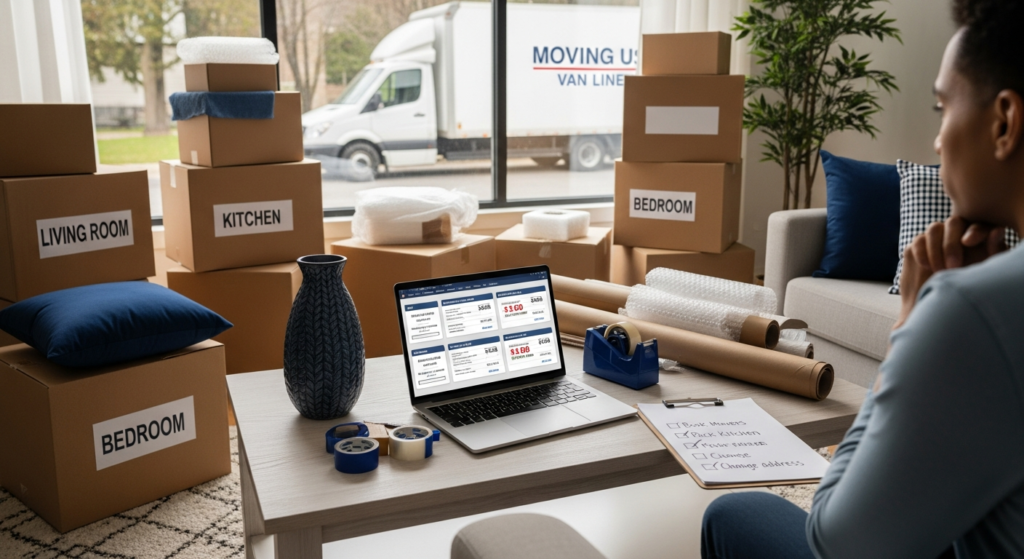
Packing is usually the longest, most stressful part of moving. It affects how much your move costs, how smoothly moving day goes, and how quickly you can settle into your new place. When you know exactly how to pack for a move, you avoid last-minute chaos, broken items, and surprise charges from movers.
This room-by-room packing guide walks you through the entire process, from supplies and timelines to detailed checklists for every space in your home. You will see how good packing makes it easier to compare moving quotes, choose the right level of service, and keep your move on budget.
Whether you are hiring full-service movers, using a hybrid approach, or doing most of the work yourself, a clear packing strategy helps you explain your needs accurately when you compare licensed movers. Movers price jobs based on your inventory, access, and packing requirements, so organized packing is also smart quote planning.
Below, you will find a practical, commercial-grade field guide to packing: timelines, supply lists, room-by-room instructions, and what to keep with you so your essentials never get lost on the truck.
Key takeaways
- Start packing 3–4 weeks before moving day, beginning with storage spaces and least-used rooms.
- Good packing is also good quote planning: accurate box counts and item lists help movers price your job properly.
- Use a room-by-room packing plan so you do not forget spaces like closets, laundry, or outdoor storage.
- Quality boxes, padding, and labeling reduce damage risk and speed up loading, unloading, and unpacking.
- Separate a moving-day essentials kit with documents, medications, devices, and 2–3 days of clothing.
- Decide early which items movers will handle versus what you will pack yourself or move in your own vehicle.
- Use a comparison tool like Moving US Van Lines to match your packing needs with the right type of mover.
Why smart packing matters for your move
If you are wondering how to pack for a move, it helps to understand why packing is more than just putting things into boxes. Well-planned packing directly affects:
- Total cost: More boxes, loose items, and poorly packed furniture usually mean more labor time and sometimes higher fees.
- Estimate accuracy: Movers build quotes around your inventory and packing needs. If you underestimate, your final bill can be higher than expected.
- Damage risk: Improvised or overloaded boxes and unprotected furniture are common causes of breakage.
- Move speed: Clearly labeled, well-packed boxes move faster on and off the truck, especially if the crew can see where each box goes.
- Stress level: A structured, room-by-room packing approach reduces last-minute scrambling and confusion on moving day.
When you request moving quotes, movers will ask about your home size, number of rooms, special items, and whether you need packing service. The more organized you are, the easier it is to compare quotes side by side and choose the right level of help.
Suggested packing timeline
Most households underestimate how long packing takes. Even a one-bedroom apartment can require several full days of focused work. Use this sample timeline as a starting point and adjust based on your home size and schedule.
| Time before move | Key packing tasks | How it helps your move |
|---|---|---|
| 4–6 weeks | Declutter, donate, and sell; measure large furniture; note specialty items. | Shrinks your load, supports accurate quotes, and avoids moving items you do not need. |
| 3–4 weeks | Pack off-season items, storage areas, decor, books, and rarely used kitchen gear. | Reduces visible clutter so you can clearly see remaining work and update movers if needed. |
| 2–3 weeks | Pack most bedrooms (except daily essentials), extra linens, office supplies, and hobby items. | Spreads labor over time and keeps your move on schedule. |
| 1 week | Pack the bulk of the kitchen, remaining decor, electronics, and non-essential bathroom items. | Ensures only true daily essentials remain unpacked in the last days. |
| 1–2 days | Pack bedding, last kitchen items, final clothing, and moving-day essentials kit. | Gets your home 95–100% ready when the crew arrives. |
Tip: When you compare quotes, ask movers how far in advance they recommend having boxes packed for your specific move size and service level.
Essential packing supplies and setup
Before you focus on room by room packing, gather the right tools. Quality materials make packing faster and safer, especially for long-distance and interstate moves.
Core packing supplies
- Small, medium, and large moving boxes
- Dish packs and wardrobe boxes (optional but helpful)
- Heavy-duty tape and a tape dispenser
- Packing paper and bubble wrap
- Stretch wrap for furniture and drawers (if you plan to wrap items)
- Moving blankets (if you are not relying fully on mover-provided pads)
- Permanent markers in 2–3 colors
- Zip-top bags for small parts and hardware
- Labels or colored stickers for rooms
- Utility knife or scissors
Set up a packing station
Create a central packing area where you keep most supplies. This helps you maintain momentum and avoid searching for tape or markers every 10 minutes.
- Clear a table or counter at a comfortable height.
- Stack flat boxes nearby by size.
- Keep one box open for trash and another for donations.
- Set up a «fragile» area for delicate items waiting to be wrapped.
Sample labeling system: «KITCHEN — GLASSES — Box 12 of 35 — Fragile — Open First»
What to do before requesting moving quotes
Good packing planning starts before you even request quotes. The more precise your inventory and packing decisions, the better movers can match services and pricing to your needs.
Decide your packing approach
When you think about how to pack to move, consider how much professional help you want and what fits your budget and schedule.
| Packing approach | What it looks like | Best for |
|---|---|---|
| Full-service packing | Movers pack most or all of your home, provide materials, and often unpack some items. | Busy households, long-distance or interstate moves, high-value or complex items. |
| Partial packing | You pack most items; movers pack fragile or time-consuming rooms like the kitchen. | Budget-conscious moves that still want professional packing for riskier items. |
| DIY packing | You purchase supplies and pack all boxes; movers only handle loading, transport, and delivery. | Local moves, smaller homes, and people with time and hands-on help. |
When you speak with movers found through Moving US Van Lines, be clear about your choice. Your approach directly affects the quote.
Build a simple room-by-room inventory
Walk through each room and list large items and estimated box counts. You do not need perfection, but reasonable detail helps movers give far more accurate pricing, especially for long-distance and commercial moving projects.
- Note bulky items (sectionals, king beds, large dressers, desks).
- Highlight fragile or high-value pieces (antiques, art, large TVs).
- Estimate box counts by room (you can refine these as you pack).
- Take photos of complex electronics setups if you plan to reconnect them yourself later.
Example description for quotes: «Two-bedroom apartment on 3rd floor with elevator, about 40–50 boxes, one sectional sofa, two queen beds, one 65-inch TV, and some framed art.»
Room-by-room packing strategy overview
Instead of bouncing around the house, use a structured sequence. This is where a room by room packing system really pays off. A good order is:
- Storage spaces (attic, basement, closets, garage)
- Dining room and decor
- Books, hobby items, and home office
- Bedrooms and non-daily clothing
- Living room and media
- Kitchen and pantry
- Bathrooms and laundry
- Last-day essentials in all rooms
Each section below walks through how to pack for a move in that specific space, including packing tips for moving and what to set aside for moving day.
How to pack the kitchen
The kitchen is one of the most time-consuming rooms, so do not leave it until the last day. Plan to pack it 5–7 days before your move, keeping only a small «mini kitchen» of essentials available until the end.
Step-by-step kitchen packing
- Sort and declutter: Toss expired food, mismatched containers, and gadgets you never use.
- Pack rarely used items first: Holiday dishes, specialty bakeware, and serving platters.
- Create a mini kitchen: Set aside a few plates, bowls, utensils, one pan, and a coffee setup for the final days.
- Use dish packs for fragiles: These taller, double-walled boxes protect plates, bowls, and glasses.
- Wrap each glass: Use packing paper and stand glasses upright. Do not lay them flat.
- Fill gaps: Use dish towels, oven mitts, and paper to pad spaces inside boxes.
- Label clearly: Mark every box «KITCHEN» plus contents and «FRAGILE» when needed.
Packing pantry and food
- Use small boxes for cans; they get heavy quickly.
- Seal open packages with tape or zip-top bags.
- Avoid packing liquids that could leak or that movers may not transport.
- Consider donating unopened nonperishables you do not want to move.
Label example: «KITCHEN — SPICES/OILS (no glass) — Box 4 of 12»
How to pack living room and family spaces
Living rooms usually include electronics, decor, and bulky furniture. The goal is to protect delicate items and make large pieces easy for movers to handle.
Electronics and media
- Take photos of cable connections behind TVs and receivers.
- Use original boxes when available; otherwise, wrap items in bubble and pack upright.
- Pack remotes, cables, and small parts in labeled zip-top bags and tape them to the main item or place in a clearly labeled «CABLES/REMOTES» box.
- Avoid using newsprint directly on screens; use microfiber cloths and bubble or foam.
Books, decor, and frames
- Use small boxes for books; fill any gaps with soft items to keep weight manageable.
- Wrap framed photos and art in paper or bubble and pack vertically, like records.
- Cushion the bottom and sides of boxes with crumpled paper.
Furniture
- Empty bookcases and media consoles completely.
- Decide whether movers will disassemble pieces like sectionals or if you will do it.
- Place hardware in labeled bags and attach them securely to furniture or a «HARDWARE» box.
- Ask movers about using their pads and stretch wrap; many crews bring their own protection.
How to pack bedrooms and closets
Bedrooms are easier than kitchens but still require planning, especially for clothing, bedding, and personal items you will need soon after arrival.
Clothing
- Use wardrobe boxes for hanging clothes you do not want wrinkled.
- Pack out-of-season clothing first in medium boxes or bins.
- Keep 2–3 days of outfits aside per person in a suitcase or duffel you will move yourself.
- Use small boxes for shoes; stuff with paper to maintain shape.
Bedding and linens
- Pack extra linens, blankets, and pillows in large boxes or vacuum bags.
- Label at least one set per bed as «OPEN FIRST» so you can make beds quickly at the new home.
Personal items and valuables
- Keep jewelry, passports, important documents, and medications in a separate, clearly identified bag you will carry yourself.
- Use small boxes or pouches for drawer items and label by person or room.
Here is a simple comparison of packing choices many people make for bedrooms:
| Bedroom item | DIY pack or mover pack? | Notes |
|---|---|---|
| Everyday clothing | DIY is usually fine | Use wardrobe boxes for convenience if budget allows. |
| Mattresses and bed frames | Often best for movers | Movers have tools and covers; confirm service in your quote. |
| Jewelry and small valuables | You pack and transport | Keep with you for security and quick access. |
How to pack bathrooms and laundry areas
Bathrooms are usually quick but involve liquids, breakables, and daily essentials. Plan to pack most items a few days before your move, leaving a small kit in use.
Bathroom packing tips
- Discard expired cosmetics, medications, and half-empty products you do not love.
- Use small boxes or bins for toiletries; liquids should go into sealed bags first.
- Wrap glass containers and fragile items in paper or bubble wrap.
- Pack extra towels, bath mats, and shower curtains together and label by bathroom.
Laundry and cleaning supplies
- Use up open detergents and cleaning products when possible.
- Ask movers what types of liquids or chemicals they will not transport.
- Pack laundry baskets with soft items like linens or clothing to save space.
Essentials bag example: toothbrushes, travel-size toiletries, one towel per person, basic first aid, daily medications.
How to pack garage, storage, and utility spaces
Garages, sheds, and storage areas often hold heavy, awkward, or restricted items. Start here early when planning how to pack for a move so you have time to sort and dispose of anything movers cannot take.
Sort and identify restricted items
- Check for paints, solvents, propane, and chemicals that movers typically will not transport.
- Safely dispose of restricted items according to local guidelines.
- Decide what tools, equipment, or outdoor furniture are worth moving.
Packing tools and equipment
- Bundle long-handled tools with tape or rope.
- Drain gas and oil from small engines if your mover requires it.
- Use medium boxes for tools; heavy items go on the bottom with padding.
- Disassemble large shelving units if needed and keep hardware in labeled bags.
Attics, basements, and off-site storage
- Clear these spaces at least three weeks before your move.
- Decide what can be donated or discarded rather than moved.
- Label boxes from storage clearly; these are often lower priority at the new home.
Packing special and high-value items
Some belongings need extra attention or professional handling. When you request quotes, mention any specialty items so movers can plan crew, equipment, and packing support.
Common specialty items
- Large TVs and complex entertainment systems
- Artwork, mirrors, and antiques
- Pianos and organs
- Glass tabletops and fragile furniture
- Large aquariums or terrariums
- Fitness equipment and treadmills
Here is a quick comparison of typical options for specialty items:
| Item type | Recommended handling | Quote and packing notes |
|---|---|---|
| Fine art or large mirrors | Custom crating or professional packing | Tell movers sizes and values; may affect valuation options. |
| Piano | Specialty crew and equipment | Often priced as an extra; stairs and distance matter. |
| Large TV (65″+) | Original box or padded TV carton | Mention if you do not have the original packaging. |
When using a platform like Moving US Van Lines to request moving quotes, list these items in your description and ask how each company handles packing, protection, and any additional charges.
What affects packing and moving costs
Even if you are primarily looking up packing tips for moving, it is smart to understand how packing choices impact your total moving cost. Different movers and move types (local, long-distance, interstate, commercial) may price things differently, but common factors include:
- Home size and total inventory
- Number of boxes and loose items
- How prepared your home is when the crew arrives
- Specialty or high-value items requiring extra protection
- Access issues such as stairs, elevators, or long walks
- Level of service (DIY packing, partial packing, full-service packing)
Use this table as a quick reference when you compare quotes and decide how to pack to move:
| Cost factor | How packing affects it | What you can do |
|---|---|---|
| Total volume/weight | More items and boxes generally mean higher costs. | Declutter early and avoid moving items you will not use. |
| Labor time on moving day | Loose items and last-minute packing slow crews down. | Fully pack before move day and use consistent labeling. |
| Materials | If movers supply boxes and paper, those costs are built in. | Ask for material pricing up front; decide what you will provide. |
| Special handling | Crating, piano handling, and complex items add to quotes. | Identify these items early and compare how movers price them. |
When you use Moving US Van Lines to compare licensed movers, share your packing plan and ask how different service levels would change the price. That way, you can see the trade-off between time savings and cost.
Common packing mistakes and how to avoid them
Even with the best room by room packing plan, certain mistakes can create headaches on moving day. Being aware of them is half the battle.
- Leaving packing until the final week and running out of time.
- Using flimsy or mismatched boxes that crush easily.
- Overloading large boxes with books or heavy items.
- Skipping labels or writing only on the top of boxes.
- Packing restricted or hazardous items without checking mover rules.
- Letting movers arrive to a home that is only half-packed, which can increase labor time.
Here is a quick reference table you can use as a checklist:
| Common mistake | Why it is a problem | Better approach |
|---|---|---|
| Packing heavy items in big boxes | Boxes become too heavy and may break or cause injuries. | Use small boxes and mix lighter items on top. |
| No clear labels or room names | Slows down unloading and makes unpacking stressful. | Label sides and tops with room, contents, and fragility. |
| Skipping an essentials box | You cannot find basic items the first night. | Pack and keep an «OPEN FIRST» kit with you. |
What to keep with you on moving day
No matter how well you pack, some items should not go on the truck. Keep these with you in your personal vehicle or luggage so you are covered if the truck is delayed or you arrive earlier than the crew.
Moving-day essentials checklist
- Wallets, keys, and chargers
- Important documents (IDs, passports, medical records, leases, and contracts)
- Valuables and small electronics (laptops, tablets, jewelry)
- Basic tools (screwdriver, hex keys, box cutter, tape)
- Medications and basic first aid
- Snacks, water, and any special dietary items
- Pet food, leashes, and carriers
- 2–3 days of clothing and toiletries for each person
- One set of bedding and towels
Sample note to yourself: «Do NOT load the backpack and suitcase labeled ‘CAR ONLY.'»
How Moving US Van Lines can help you compare movers
Packing well is only half of a successful move. The other half is choosing the right moving company and service level for your situation. That is where a moving quote comparison platform like Moving US Van Lines can help.
Instead of calling movers one by one, you can submit your move details once and compare options from licensed and insured movers that serve your route. This makes it easier to match your packing plan with the right type of provider, whether you are looking at:
- Best local movers for shorter in-town moves.
- Best interstate movers for state-to-state relocations.
- Best commercial movers if you are packing an office or business space.
- Best packing and moving companies when you want more hands-on help.
- Residential moving companies focused on homes and apartments.
- Commercial moving companies equipped for offices and specialized equipment.
Helpful Moving US Van Lines resources
As you refine your packing plan, you can use these resources to compare services like full packing, partial packing, or fragile-only packing. When you speak with movers, share your room-by-room overview, any specialty items, and your target dates. This helps you see which company truly understands your needs.
Smart questions to ask movers about packing
- «How do you price packing services for my home size?»
- «Do you provide boxes and materials, or should I supply them?»
- «Can you pack only certain rooms, like my kitchen or fragile items?»
- «How do you label boxes so they end up in the correct rooms?»
- «What items will your crew not pack or transport?»
Questions like these turn your packing plan into clear expectations when you compare licensed movers side by side.
Frequently asked questions
How far in advance should I start packing for a move?
For most homes, start packing 3–4 weeks before moving day. Begin with storage areas and items you rarely use, then tackle bedrooms, living areas, and finally the kitchen and bathrooms in the last week.
What rooms should I pack first when moving?
Start with storage spaces like attics, basements, and garages, then move to less-used rooms such as guest rooms and home offices. Save high-use areas like the kitchen and main bathroom for the final week.
How many boxes will I need for a typical move?
Box counts vary by home size and how much you own, but many one-bedroom apartments use 20–35 boxes, two-bedroom homes 35–60, and three-bedroom homes 60 or more. Your actual needs will depend on your belongings and packing style.
What is the best way to label moving boxes?
Write the room name, brief contents, and any special notes like «FRAGILE» or «OPEN FIRST» on at least two sides and the top. Some people add color-coded stickers for each room to make unloading faster.
Should I let movers pack for me or pack myself?
It depends on your budget, time, and comfort level. Full-service or partial packing saves time and can provide professional protection for fragile items, while DIY packing can reduce costs if you are organized and start early.
How do I pack fragile items to avoid damage?
Use sturdy boxes, cushion the bottom with crumpled paper, wrap each item individually, and fill empty spaces so nothing shifts. Pack plates and glasses vertically, mark boxes «FRAGILE,» and avoid overloading boxes with heavy items.
Can movers transport cleaning supplies and liquids?
Many movers limit or prohibit flammable, corrosive, or pressurized products. Some may allow a small amount of tightly sealed household cleaners. Always ask each mover what they will and will not transport before packing those items.
What should I keep with me instead of putting on the moving truck?
Keep documents, medications, small valuables, basic tools, chargers, a few days of clothing, toiletries, and any items you will need immediately at your new home with you in your vehicle or luggage.
How can packing affect my moving quote?
Packing affects labor time, the number of boxes, and whether movers supply materials. If your home is fully packed and organized, crews typically work faster, which can influence time-based pricing and help keep your final bill closer to the estimate.
How do I compare movers when I already have a packing plan?
Share your room-by-room overview, box estimates, and any specialty items when you request quotes. Then compare how each mover proposes to handle your specific needs, including packing help, timing, and pricing.
Sources referenced in this guide
Professional moving and packing practices are informed by guidance from several types of resources, including Federal Motor Carrier Safety Administration consumer guidance, U.S. Department of Transportation moving guidance, state transportation and consumer protection agencies, building management move-in and move-out requirements, written moving estimates and bills of lading, and carrier tariffs, valuation options, and service agreements.
When planning how to pack for a move, you can also review any building rules at your origin and destination, since they may affect elevator reservations, loading dock time windows, or restrictions on certain materials.
After using this room-by-room packing guide, you will be better prepared to compare moving companies, understand their packing recommendations, and choose the right level of service for your budget and schedule.
To turn your packing plan into real options, you can use Moving US Van Lines to compare licensed movers, request moving quotes, and compare movers by move type. Reviewing top moving company guides can also help you see which providers specialize in the kind of move you are planning.
This guide is general moving information, not legal, insurance, or regulatory advice. Moving requirements, pricing, access rules, availability, and coverage options may vary by location, move type, mover, building rules, and service agreement.
Relocation writer covering city guides and neighborhood moving tips.
More from the blog
Compare movers by service
Where to find us
Compare quotes from licensed movers
Submit your move details once and receive custom quotes — all at no cost.