
Studio and One-Bedroom Apartment Moving Guide

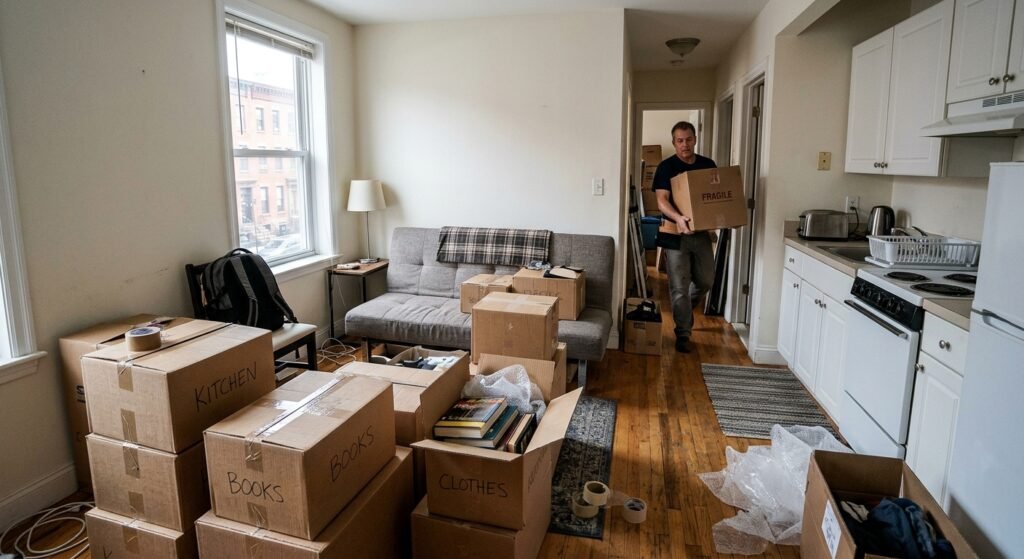
The first hard choice in a studio apartment move usually isn’t boxes or bubble wrap. It’s deciding what simply can’t come with you when there’s only one closet and your bed shares space with your “living room.”
Small places lull people into thinking, “It’s only a studio, this will be easy.” Then moving week hits, and you discover just how much can be crammed under a bed, on top of cabinets, and in that mysterious hall closet.
This guide focuses on the realities of moving a studio or one-bedroom: tight hallways, limited elevator slots, friends backing out on moving day, and the awkward middle ground where hiring pros feels optional but not always wise. It’s about shaving effort and cost where it actually matters, not applying big-house advice to a 500-square-foot life.
How a small place changes the move
A studio or one-bedroom move isn’t just a smaller version of a big-house move. The constraints are different:
- You probably have fewer large items, but proportionally more small things that take time to pack.
- Your building may have strict rules about elevator reservations, timing, and loading zones.
- Access is often tougher: fifth-floor walk-ups, narrow staircases, or tight corners.
- The budget decision is sharper: pay movers or wrangle a few friends and a rental van?
Because the overall volume is smaller, one bad decision stands out. Overpaying for services you don’t need or underestimating the work and scrambling at midnight hurts more when you’re trying to keep the entire move under a modest budget.
So your strategy should be tailored: spend energy where it buys you the biggest improvement—access planning, decluttering, and an honest look at the DIY vs. mover question.
Deciding between DIY and small apartment movers
For a studio apartment move or a one-bedroom move, you’re right on the line where DIY is possible but not always practical. The best choice depends less on square footage and more on the shape of your stuff and your buildings.
Ask yourself four blunt questions:
- How many stairs? Third-floor walk-up with narrow switchbacks? That’s very different from ground-floor to ground-floor.
- Any heavy, awkward items? Think sleeper sofas, solid wood dressers, platform beds, large TVs, or exercise equipment.
- How far is the move? A three-mile intra-city move is different from a 500-mile interstate relocation.
- How much time and help do you actually have? Not the imaginary version where everyone shows up on time.
Here’s a comparison of common scenarios and which way they usually lean. These are hypothetical examples, not hard rules.
| Scenario | DIY more realistic | Movers more realistic |
|---|---|---|
| Studio, ground floor to elevator building, local (under 15 miles) | Yes, with 2–3 friends and a small rental van | Optional, helpful if you’re short on time |
| One-bedroom, third-floor walk-up to fourth-floor walk-up, local | Possible but physically demanding | Often worth it to avoid injury and delays |
| Studio, cross-country interstate move | Possible with rental truck, but time-intensive | Common choice due to distance and logistics |
| One-bedroom with heavy furniture and fragile electronics, city to city | More risk of damage without experience | Safer if pros do the heavy lifting |
If you’re leaning toward hiring small apartment movers, be very specific when you ask for quotes:
- Emphasize access: number of floors, elevator or no elevator, tight staircases, parking situation.
- List any oversized items like a sectional sofa, large wardrobe, or king bed.
- Note if you want packing help or only loading and unloading.
That level of detail usually leads to more accurate estimates and fewer “surprise” fees tied to stairs, long carries, or tricky access.
Estimating size and cost for a studio or one-bedroom move
Most people underestimate how much space their things will take in a truck. A studio with no dining table can still involve twenty boxes of books, clothes, kitchen gear, and decor.
Here’s a rough way to think about volume. These are broad examples, not guarantees of what any particular mover or rental company will recommend.
| Apartment type | Typical main furniture | Very rough truck / space guideline (example) |
|---|---|---|
| Minimalist studio | Bed, small sofa or loveseat, TV stand, small desk, 10–20 boxes | Cargo van or small box truck |
| Typical furnished studio | Bed, dresser, small sofa, coffee table, bookshelves, 20–30 boxes | Small to medium box truck |
| One-bedroom, light furnishings | Bed, dresser, sofa, coffee table, TV stand, 25–35 boxes | Medium box truck |
| One-bedroom, fully furnished | Bed, dresser, nightstands, sofa, dining set, desk, 30–45 boxes | Medium to large box truck |
For DIY, underestimate and you make extra trips or end up driving an overstuffed, unsafe truck. Overestimate and you pay for more truck than you needed, but you’re less likely to get stuck.
With professional movers, local moves are often priced hourly, while long-distance or interstate moves are often priced based on weight or a combination of weight and distance. For a small apartment, minimum hourly charges can matter more than size—if a company has a 3–4 hour minimum, there’s a floor on what you’ll pay even if your things are out in 90 minutes.
When you request estimates, ask how they’ve structured the quote:
- Is it hourly or based on weight/volume?
- Is the estimate binding, nonbinding, or “not-to-exceed” (where applicable)?
- What’s included in the minimum charge—drive time, wrapping, fuel, stairs?
Knowing the pricing structure lets you decide whether it’s worth doing more prep yourself, like disassembling furniture or staging boxes near the door to reduce labor time.
Decluttering specifically for a small apartment move
In a small apartment, every box you move matters more. One more box is a higher percentage of your total volume than in a large house, and it can literally be the difference between “all in one trip” and “go back for another run.”
A focused declutter for a studio or one-bedroom should zoom in on three problem areas: clothes, duplicate kitchen gear, and “just-in-case” decor or hobby items.
Clothes: the low-hanging fruit
Closets in small apartments tend to be overstuffed. A quick, tough edit can shave off several boxes or bags.
- Pull everything out where you can see it.
- Immediately remove anything that doesn’t fit, is damaged, or hasn’t been worn in a full season cycle.
- Cap sentimental exceptions to a manageable number rather than letting them swallow half your closet.
Kitchen gear: duplicates and “someday” gadgets
Two cutting boards and an extra saucepan might be justified. Three dead blenders and a fondue set you’ve never used aren’t.
- Group items by type (pans, utensils, mugs, storage containers).
- Keep your one or two best of each category.
- Donate duplicates and rarely used gadgets instead of packing them out of habit.
Decor, books, and hobby items
These are the things that make your place feel like yours, but they’re also heavy and box-hungry.
- Set a realistic limit: one bin of decor, one or two boxes of books, one container for craft or hobby supplies.
- Ask: would I buy this again if I didn’t already own it? If not, consider letting it go.
If you want structure, here’s a short declutter checklist focused on studios and one-bedrooms:
- Walk-through with three bags or boxes: keep, donate/sell, trash/recycle.
- Empty at least one piece of furniture completely (like a small shelf) and decide if it still earns its floor space.
- Eliminate anything you’ve been storing only because it was hard to get home originally (like a huge mirror that never made it onto a wall).
Suggested timeline for moving a studio or one-bedroom
A small place is easier to pack in a short burst, but leaving everything to the last 48 hours is how people end up tossing random drawers into trash bags. A simple, realistic timeline helps you avoid that while staying lean.
| Time before move | Focus for a studio move | Focus for a one-bedroom move |
|---|---|---|
| 4 weeks | Confirm lease dates; measure new space; start decluttering clothes and decor. | Same as studio, plus decide DIY vs. movers and start collecting estimates if needed. |
| 3 weeks | Book truck or movers; buy packing supplies; pack rarely used items. | Lock in mover/truck reservations; begin packing off-season clothes and books. |
| 2 weeks | Confirm building rules and elevator reservations; change address; pack decor and most kitchen extras. | Same as studio, plus disassemble less-used furniture. |
| 1 week | Pack 70–80% of belongings; leave only daily essentials accessible. | Aim for 70–90% packed; stage boxes by door if space allows. |
| 2–3 days | Pack remaining kitchen and bathroom items; prepare a first-night box. | Finish packing; unplug and prep appliances; confirm logistics with helpers or movers. |
| Move day | Protect floors; remove wall items; do a final sweep for forgotten storage spots. | Meet crew or friends on time; manage elevator schedule; walkthrough old unit after loading. |
You can compress this if you have to, but the tightest bottleneck is nearly always the last 20% of packing. Give yourself daylight hours to handle that part, not midnight of move day.
Packing strategies for tight spaces
In a small apartment, there’s no spare room to stage towers of boxes. You’re packing while still living in the same 400–700 square feet. The goal is to keep at least one area reasonably clear while everything else gradually disappears into cartons.
Zone your space
Pick one “safe zone” where packed boxes will live—often along one wall in the living area, or under a window. Everything else gets cleared progressively toward that zone. This keeps walking paths open and makes move day loading more efficient.
Use the right box sizes
- Small boxes for books, pantry items, dense kitchenware.
- Medium boxes for clothes, linens, lighter decor.
- Large boxes sparingly for very light items like pillows and bedding.
In a studio, it’s usually better to have more small/medium boxes than a few overstuffed large ones. They’re easier to maneuver around tight corners and down stairs.
Pack furniture smartly
- Disassemble what you realistically can: legs off tables, headboards off bed frames, shelves out of bookcases.
- Keep hardware in labeled zip-top bags taped to the furniture pieces.
- Use furniture pads or thick blankets on any pieces that will be tilted through doorways or tight halls.
Don’t forget vertical space
In one-room living, you may have built up, not out—floating shelves, stacked bins in closets, tall bookcases. Take photos of setups you want to replicate in the new place, then carefully pack the vertical system in labeled layers so reassembly is easier.
Managing building rules, elevators, and parking
For many small apartment moves, the slowest part isn’t driving. It’s waiting: for elevators, for building staff, for someone to vacate the loading zone. That’s where a little planning pays back big.
Clarify your building’s move rules early
Almost every apartment building has some policies, even if they’re informal. These can affect your timing and costs.
- Required move hours (e.g., weekdays only, no late nights).
- Elevator reservations or dedicated freight elevators.
- Certificate of Insurance (COI) requirements for professional movers.
- Loading dock or alley access rules.
Confirm these at least two weeks ahead so you can schedule your move—and your movers or rental truck—during the allowed window.
Elevator and stair realities
Even in a small building, the stairs or elevator can dictate how long your move takes. Here’s how different setups typically affect things:
| Access type | Impact on move | Practical tips |
|---|---|---|
| Ground floor, direct to street | Fastest loading; fewer labor hours. | Stage boxes close to door; protect doorway edges. |
| Elevator, no reservation needed | Moderate pace; possible waits if other residents need elevator. | Avoid peak move times and general rush hours. |
| Freight elevator with reservation | Efficient, but schedule is inflexible. | Be ready to load immediately when your window starts. |
| Walk-up, 2–3 floors | Slower; more physical strain. | Use smaller boxes; plan rest breaks; consider pro help. |
| Walk-up, 4+ floors | Longest load/unload times; higher injury risk. | Strongly consider movers, especially for a one-bedroom. |
Parking and loading zones
Parking is where DIY moves often fall apart. A studio’s entire move can grind to a halt if your rental van has to sit around the corner while you walk every box down the block.
- Scout your current and new buildings at the same time of day as your planned move.
- Check for any posted restrictions: street cleaning, resident-only parking, no-parking zones.
- Ask your landlord or property manager where movers usually park.
Some cities have permits for temporary no-parking zones for moving trucks. Rules and availability vary, and there may be fees and time limits. If you’re moving within a city where that might apply, look into it several weeks before move day so you’re not improvising.
Move-day logistics for studios and one-bedrooms
A studio or one-bedroom move can be lightning fast or painfully slow, depending on how organized your load-out is. Your goal is to compress chaos into a short, controlled window.
Set up your move-day layout
Before anyone starts hauling boxes, do a quick reset of your space:
- Clear narrow hallways and doorway areas entirely.
- Stack boxes by size and weight, heaviest closest to the door.
- Leave a small “last in/first out” area for essentials (backpack, paperwork, a small tool kit).
If you’re using movers
Have a simple script for the crew leader when they arrive:
- Point out fragile or high-priority items first.
- Walk them through the access: stairs, elevator, parking spot location.
- Confirm what they’re doing vs. what you’ve already handled (disassembly, packing, TV unmounting).
Then step back enough for them to work, but stay available to answer questions or make quick judgment calls—especially about what’s trash vs. coming with you.
If you’re doing a DIY move
Give everyone specific roles rather than letting the day devolve into random activity:
- Two people on “shuttle” duty between apartment and truck.
- One person inside the truck arranging and securing loads.
- One person inside the apartment handing items to the shuttlers and checking rooms.
Rotating roles every 45–60 minutes keeps fatigue and frustration from wrecking the day, especially in walk-ups.
Final sweep of a small apartment
Studios and one-bedrooms have more hiding places than you think. Before handing back keys, check:
- Back of every closet and high shelves.
- Cabinets above fridges or microwaves.
- Under bed frames, sofas, and dressers.
- Washing machines and dryers if they’re in-unit.
A quick photo or video of empty rooms can be helpful if there’s any later disagreement about condition, though rules on deposits and inspections vary by landlord and jurisdiction.
Protecting your stuff: valuation, damage, and risk
People sometimes assume a smaller move equals smaller risk. But if most of what you own fits into a couple of rooms, one damaged TV or crushed computer monitor can feel like a much bigger hit.
If you hire movers
Professional movers typically include some level of valuation coverage in the base price for interstate moves, and may offer different options for local moves. It’s important to understand:
- Valuation is not the same as third-party insurance. It’s the mover’s level of financial responsibility under their contract.
- Basic valuation options may reimburse at a low rate per pound, which isn’t much for electronics or high-value items.
- Upgraded coverage (when available) usually costs more but may reflect replacement value more accurately.
If you have a few particularly valuable items in a small apartment—a high-end TV, gaming PC, instruments—ask the moving company how those items would be covered under different valuation options. Rules vary, and they may require special packing or documentation.
If you’re moving yourself
When you rent a truck or van, the rental company may offer optional damage waivers or cargo protection. These are typically separate from any personal auto insurance you have and may have exclusions or limits on what’s covered inside the truck.
Read the terms carefully before assuming your belongings are protected in all situations. For high-value items, some people look into separate coverage options; availability and conditions differ by provider and location.
Basic physical protection
Regardless of who moves you, small precautions go a long way:
- Use TV boxes or sturdy, well-padded alternatives for screens.
- Wrap corners of furniture that will skim walls or railings.
- Don’t stack heavy boxes on top of loosely packed or fragile ones.
- Label more clearly than you think you need to—especially fragile boxes and those with liquids.
Where to save money (and where not to)
For a studio apartment move or a modest one-bedroom, overspending often happens in three places: too many supplies, unnecessary labor, and last-minute decisions.
Smart places to cut costs
- Supplies: Use what you already own—suitcases, duffel bags, dresser drawers (if they can be safely moved with clothes inside), sturdy bins.
- Off-peak days: If your schedule allows, weekdays and mid-month dates can be less expensive than weekends and month-ends with some providers.
- Self-packing: Packing your own boxes usually reduces labor charges, as long as you pack solidly.
Places not to skimp
- Heavy or awkward lifting: Saving a bit of money isn’t worth a back injury or dropped sofa in a stairwell.
- Building rules: Ignoring move windows or freight elevator procedures can result in fines or conflicts with management.
- Truck size: Choosing something too small to force “just one more trip” can cost more in time, fuel, and frustration than you saved.
Typical trade-offs for small apartment movers
When you look at quotes, you’re usually balancing time versus money. This table highlights some of the common trade-offs people consider. These are hypothetical cost descriptions, not actual price promises.
| Option | What you save | What you spend (or risk) |
|---|---|---|
| DIY with friends and rental van | Lower direct cost if nothing breaks and schedule holds. | Your time, physical effort, higher risk of damage, possible extra trips. |
| Hire movers for loading/unloading only | You drive the truck, reducing full-service fees. | Responsibility for the vehicle and any in-transit issues. |
| Full-service small apartment movers | Saved time and effort; experienced handling. | Higher overall cost; must schedule around their availability. |
Using quote comparisons for a small apartment move
The biggest mistake in a studio or one-bedroom move is assuming it’s “too small” to warrant real comparison shopping. A short, focused comparison can still protect you from paying more than you need or getting caught by vague terms.
Line items worth comparing
When you have two or three quotes in hand—whether for professional movers or rental trucks—line them up on the details, not just the total.
| Item to compare | Why it matters for a small move | What to ask |
|---|---|---|
| Minimum hours or charges | You might hit the minimum easily; a slightly higher hourly rate with fewer minimum hours can be cheaper overall. | How many hours are included? How is partial time billed? |
| Stair and long-carry fees | Walk-ups and long hallways are common in small apartments and can add costs. | How do you charge for stairs? Is my building setup included in this quote? |
| Packing services and materials | You may only need limited help (like for the kitchen or fragile items). | Can I choose partial packing services? How are materials billed? |
| Valuation or protection options | A few high-value items can represent a big share of your total belongings. | What’s included by default and what upgrades are available? |
You don’t need twenty quotes, but two or three clearly explained ones let you see if a “cheap” option is really cheaper once all the relevant fees are included.
If you don’t have the time or patience to track down multiple companies yourself, using a comparison service like Moving US Van Lines can be a shortcut to identify potential movers and get competing offers. The platform doesn’t run the moves or set prices, but it does make it easier to see which providers are interested in your specific type of move so you can follow up with the ones that fit.
FAQ: Studio and one-bedroom moves
How early should I start preparing for a studio apartment move?
For most studio moves, starting about four weeks out is comfortable. The first two weeks can focus on decluttering and logistics—confirming lease dates, deciding on DIY vs. movers, and reserving a truck or crew. The final two weeks are for packing non-essentials, handling address changes and building rules, then boxing up daily items in the last few days. If you’re moving at the end of a busy month or across state lines, add extra time for scheduling and paperwork.
Is hiring movers worth it for a one-bedroom move?
It can be, depending on access, distance, and your own bandwidth. If you’re in a walk-up, have heavy furniture, or are moving a one-bedroom across town during a tight workweek, paying for professional help often makes sense. You’re buying speed, experience with tight spaces, and less physical risk. If you’re on the ground floor with minimal furniture and flexible timing, a DIY approach with a rental truck may be reasonable, especially for a short local move.
How many boxes does a typical studio or one-bedroom require?
It varies by how much you own and how aggressively you declutter. As a rough range, a minimalist studio might take 15–25 boxes, while a fuller studio could use 25–35. One-bedroom apartments often land somewhere around 25–45 boxes. The best way to estimate is to start packing non-essentials early and see how quickly you fill cartons; that real-world feedback is more useful than any generic rule of thumb.
What size truck do I need for a small apartment move?
Truck sizes are usually described by feet of length or estimated “rooms” of furniture, but those labels are only ballpark guides. Many studios fit into a cargo van or small box truck; one-bedrooms often call for a medium truck. The right size depends on your actual furniture and box count. Make a quick inventory—major pieces plus a rough number of boxes—then discuss it with the mover or rental company so they can recommend something with a bit of extra room rather than the tightest possible fit.
How can I move a studio apartment in one day without chaos?
Two decisions matter most: do as much as possible before move day and set a clear plan for the actual loading. Have at least 70–80% of your belongings packed and labeled the day before. On move day, clear paths, stack boxes by the door with heaviest on the bottom, assign roles if you’re using friends, and keep one small area for essentials that will travel with you. A studio can be moved in a single day if you’re not still packing while people are carrying boxes out.
What’s the best way to handle a move from a walk-up apartment?
Walk-ups add time and strain, even for small apartments. Use smaller, tightly packed boxes so they’re easier to carry up and down stairs. Disassemble large furniture to reduce awkward angles. If there are more than two flights or you have heavy pieces like a sleeper sofa or solid wood dresser, strongly consider hiring movers familiar with walk-ups. They’ll typically bring the right equipment and pacing to avoid injuries and damage in the stairwell.
How do I keep my building manager happy during my move?
Most building managers care about three things: timing, protection, and communication. Book any required elevator slot early and stick to the agreed hours. Lay down floor protection in hallways and elevators if requested, and avoid blocking exits or entry doors. Let them know if you’re using professional movers and, if they require it, arrange for a certificate of insurance before move day. A quick check-in when you’re finished helps confirm there were no issues with common areas.
Can I use drawers and suitcases instead of buying more boxes?
Often yes, within reason. Suitcases and duffel bags are great for clothes, linens, and soft items. Some dressers can be moved with drawers full of lightweight clothing if the piece is sturdy and you or your movers are comfortable handling the extra weight; heavier or older furniture may need drawers emptied to avoid damage. Ask your movers how they prefer to handle dressers, or if you’re DIY-ing, test the weight and stability before committing to leaving drawers full.
What should I do first when I arrive at my new small apartment?
Before bringing in the first box, confirm where the truck will park and how you’ll move things through the building. Once you start unloading, prioritize assembling the bed and setting up a small “landing zone” for boxes—often along one wall—so the space doesn’t immediately feel clogged. Plug in the fridge if it was unplugged, set up basic lighting if the unit is dim, and unpack your first-night essentials box so you’re not hunting for toiletries or a change of clothes at midnight.
Once you’ve decided how much you want to handle yourself and where professional help would actually save you time or strain, you can start gathering estimates that fit the reality of your studio or one-bedroom. If you’d like a faster way to see what’s out there, you can use Moving US Van Lines as a starting point to compare options and then vet the movers that seem like the best match for your move size, distance, and budget.
Senior editor and fact-checker for the USVL moving-cost database.
More from the blog
Compare movers by service
Where to find us
Compare quotes from licensed movers
Submit your move details once and receive custom quotes — all at no cost.